This article contains affiliate links. We may earn a commission if you make a purchase through our links, at no extra cost to you.
Key Takeaways
- Vestibular input from swinging helps regulate the nervous system, improving focus and reducing anxiety
- Sensory swings come in multiple styles: pod/cocoon, platform, hammock, and compression swings
- 69-96% of autistic children experience sensory processing challenges, often including vestibular differences
- Linear (back-and-forth) movement is calming; rotary (spinning) movement is alerting
- Beyond swings, balance boards, spinning toys, and scooter boards provide excellent vestibular input
When a child on the autism spectrum retreats to a corner to spin, rock, or sway, they're not misbehaving. They're self-regulating. Their nervous system is seeking the vestibular input it desperately needs to feel calm, focused, and in control.
For the estimated 69-96% of autistic children who experience sensory processing challenges, movement isn't just play. It's therapy. It's communication. It's a fundamental need as important as food or sleep.
This guide covers everything you need to know about sensory swings and vestibular toys for children with autism and ADHD. Whether you're a parent researching options for the first time, a caregiver looking for evidence-based solutions, or an educator seeking classroom-friendly tools, you'll find research-backed information, product guidance, and practical advice.
Table of Contents
- What Are Sensory Swings and Vestibular Toys?
- Why Vestibular Input Matters for Autism & ADHD
- Types of Sensory Swings
- Other Vestibular Toys Beyond Swings
- How to Choose the Right Sensory Swing
- Installation Options Explained
- Top Sensory Swing Brands Compared
- Creating a Sensory Swing Routine
- Safety Guidelines
- Frequently Asked Questions
What Are Sensory Swings and Vestibular Toys?
A sensory swing is a specialized swing designed to provide therapeutic vestibular input through controlled movement, helping children with autism, ADHD, and sensory processing differences regulate their nervous systems, improve focus, and reduce anxiety.
Unlike playground swings built purely for recreation, sensory swings are engineered with therapeutic outcomes in mind. They come in various forms, including pod swings that cocoon the child, platform swings that allow different positions, and compression swings that add deep pressure input.
Understanding the Vestibular System
The vestibular system is located in the inner ear and acts as the body's internal GPS. It processes information about movement, balance, and spatial orientation. Every time you tilt your head, spin around, or change direction, your vestibular system sends signals to your brain about where your body is in space.
For neurotypical children, this system works seamlessly in the background. But for many children with autism or ADHD, the vestibular system may be under-responsive (craving constant movement) or over-responsive (becoming easily overwhelmed by motion).
Sensory swings and vestibular toys provide controlled input to this system. The rhythmic, predictable movement helps the brain process vestibular information more effectively, leading to improved regulation, attention, and calm.
For a deeper exploration of how movement therapy supports neurodivergent children, see our article on the science-backed benefits of swinging for autistic children. Parents of children with ADHD will find specific guidance in our resource on vestibular therapy for ADHD.
The vestibular system doesn't work in isolation—it connects closely with other sensory systems. Children who seek vestibular input often also seek tactile input (touch and texture) or oral sensory input (chewing and mouthing). Understanding these connections helps you build a comprehensive sensory toolkit.
Linear vs. Rotary Movement
Not all vestibular input is created equal. Understanding the difference between movement types helps you choose the right tools for your child:
| Movement Type | Examples | Effect | Best For | |---------------|----------|--------|----------| | Linear | Back-and-forth swinging, rocking | Calming, organizing | Anxious or overstimulated children | | Rotary | Spinning, twirling | Alerting, energizing | Under-responsive children who seek input | | Vertical | Bouncing, jumping | Moderately alerting | Proprioceptive seekers, transition times | | Irregular | Unpredictable movements | Highly alerting | Should be used cautiously with OT guidance |
Most occupational therapists recommend starting with slow, linear movement and observing how your child responds before introducing faster or rotary options.
Why Vestibular Input Matters for Autism & ADHD
According to the CDC, approximately 1 in 36 children in the United States has autism spectrum disorder. Research indicates that 69-96% of these children experience some form of sensory processing challenge, with vestibular differences being among the most common.
Clinical studies show that 80% of autistic children demonstrate atypical responses in vestibular testing. This means their inner ear's balance and movement processing system works differently from neurotypical peers, affecting everything from coordination to emotional regulation.
The Research Behind Vestibular Therapy
A 2025 randomized controlled trial by Erik, Safran, and Şevgin studied 22 children with mild-to-moderate autism, comparing standard physiotherapy to physiotherapy combined with vestibular exercises. The group receiving vestibular input showed significant reductions in hyperactivity and impulsivity (p < 0.001, meaning this result is highly unlikely to be due to chance) after just eight weeks.
A 2025 meta-analysis (a study combining results from multiple research papers) published in Frontiers in Psychiatry found that sensory integration-based interventions effectively enhance autistic children's abilities in three key areas: balance, tactile defensiveness, and proprioception. While research shows mixed but promising results overall, recent studies consistently point to meaningful improvements when vestibular activities are properly implemented.
Signs Your Child May Benefit from Vestibular Input
Children who need more vestibular input often display these behaviors:
- Constant movement seeking: Can't sit still, always rocking, spinning, or swinging
- Crashing and bumping: Seeks out impact and collision
- Poor balance or coordination: Difficulty with age-appropriate motor tasks
- Difficulty with transitions: Struggles to shift between activities
- Emotional dysregulation: Frequent meltdowns or difficulty calming down
- Short attention span: Trouble focusing without movement breaks
- Head-tilting or unusual positions: Seeks different perspectives
Conversely, children who are over-responsive to vestibular input may:
- Avoid movement activities: Fear of swings, slides, or being picked up
- Get motion sick easily: Nauseous in cars or on gentle movement
- Prefer sedentary activities: Chooses stationary play
- Seem anxious about playground equipment: Avoids anything that moves
Both profiles can benefit from the right vestibular intervention. The key is starting slowly and observing your child's responses. We always recommend consulting with your child's occupational therapist before starting any sensory program at home.
Types of Sensory Swings
Sensory swings come in several distinct styles, each offering different therapeutic benefits. The right choice depends on your child's sensory preferences, available space, and budget.
Pod and Cocoon Swings
Price Range: $40-$150
Pod swings (also called cocoon or nest swings) feature an enclosed, fabric design that wraps around the child. This creates a cozy, womb-like environment that provides both vestibular input and deep pressure.
Best for: Children who seek proprioceptive input alongside movement, those who feel overwhelmed in open spaces, and kids who benefit from a calming "hideaway" feeling.
Key features:
- Soft, stretchy fabric that provides gentle compression
- 360-degree rotation capability
- Enclosed design blocks visual stimulation
- Typically holds 100-200 pounds
Pod swings are often the first choice for newly diagnosed children because they offer a gentler, more contained experience. For detailed recommendations, see our guide to pod swing options for sensory seekers.
The difference between pod and hammock-style swings can be significant. Learn more in our pod swing vs hammock swing comparison.
Platform Swings
Price Range: $100-$400
Platform swings feature a flat, sturdy surface that allows children to sit, stand, lie prone, or kneel while swinging. This versatility makes them a favorite in occupational therapy clinics.
Best for: Children who need to work on core strength and balance, those who prefer more freedom of movement, and families with multiple children (platform swings can accommodate more than one user).
Key features:
- Firm, stable surface
- Multiple positioning options
- Higher weight capacities (often 400-800 pounds)
- Excellent for "Superman" prone positioning
- Can be used for group activities
Platform swings require more space but offer unmatched therapeutic versatility. They're particularly effective for children working on postural control. Check out our recommendations for the best platform swings for therapy use at home.
Hammock and Cuddle Swings
Price Range: $40-$120
Hammock swings offer an open, fabric cradle design that supports the body while allowing free movement. Cuddle swings are similar but often feature more structure or padding.
Best for: Teens and adults who have outgrown pod swings, children who prefer less constricting options, and those seeking a gentler rocking motion.
Key features:
- Open design with full-body support
- Breathable fabric options
- Often adjustable for different positions
- Natural rocking motion
- Many styles suitable for indoor and outdoor use
Hammock-style swings work well for older children, teens, and adults with autism or ADHD. See our guide to vestibular toys for teens and adults for more options.
Compression and Therapy Swings
Price Range: $60-$200
Compression swings, like those made by Harkla, combine vestibular input with deep pressure therapy. The stretchy fabric surrounds the child completely, providing a "hug" sensation while swinging.
Best for: Children who actively seek squeezing or pressure, those with anxiety or difficulty calming, and sensory seekers who benefit from multiple input types simultaneously.
Key features:
- Lycra or spandex fabric that stretches but doesn't sag
- 360-degree rotation
- Combined vestibular and proprioceptive input
- Often recommended by occupational therapists
- Various size options for different ages
For a comprehensive look at the best options across all categories, see our guide to the best sensory swings for autism.
Indoor vs. Outdoor Options
Choosing between indoor and outdoor setups depends on your space, climate, and how you plan to use the swing.
| Factor | Indoor Swings | Outdoor Swings | |--------|---------------|----------------| | Year-round use | Yes | Weather-dependent | | Installation | Ceiling mount, doorway, or stand | Tree, porch, or dedicated structure | | Materials | Often softer, less weather-resistant | UV-resistant, weatherproof | | Supervision | Easier to monitor | Requires outdoor presence | | Space needs | Minimum 6-foot clearance | More flexibility | | Cost | Similar | Similar, plus structure costs |
Many families opt for both. An indoor swing ensures consistent access to vestibular input regardless of weather, while outdoor options provide fresh air and additional space for movement.
For a detailed breakdown, see our indoor vs outdoor swings guide.
Other Vestibular Toys Beyond Swings
While sensory swings are the gold standard for vestibular input, several other tools can complement or substitute for swinging, especially when space is limited.
Balance Boards
Balance boards are flat platforms positioned on a rounded or wobble base, requiring the user to maintain equilibrium while standing or sitting.
Benefits:
- Improves core strength and stability
- Enhances body awareness and coordination
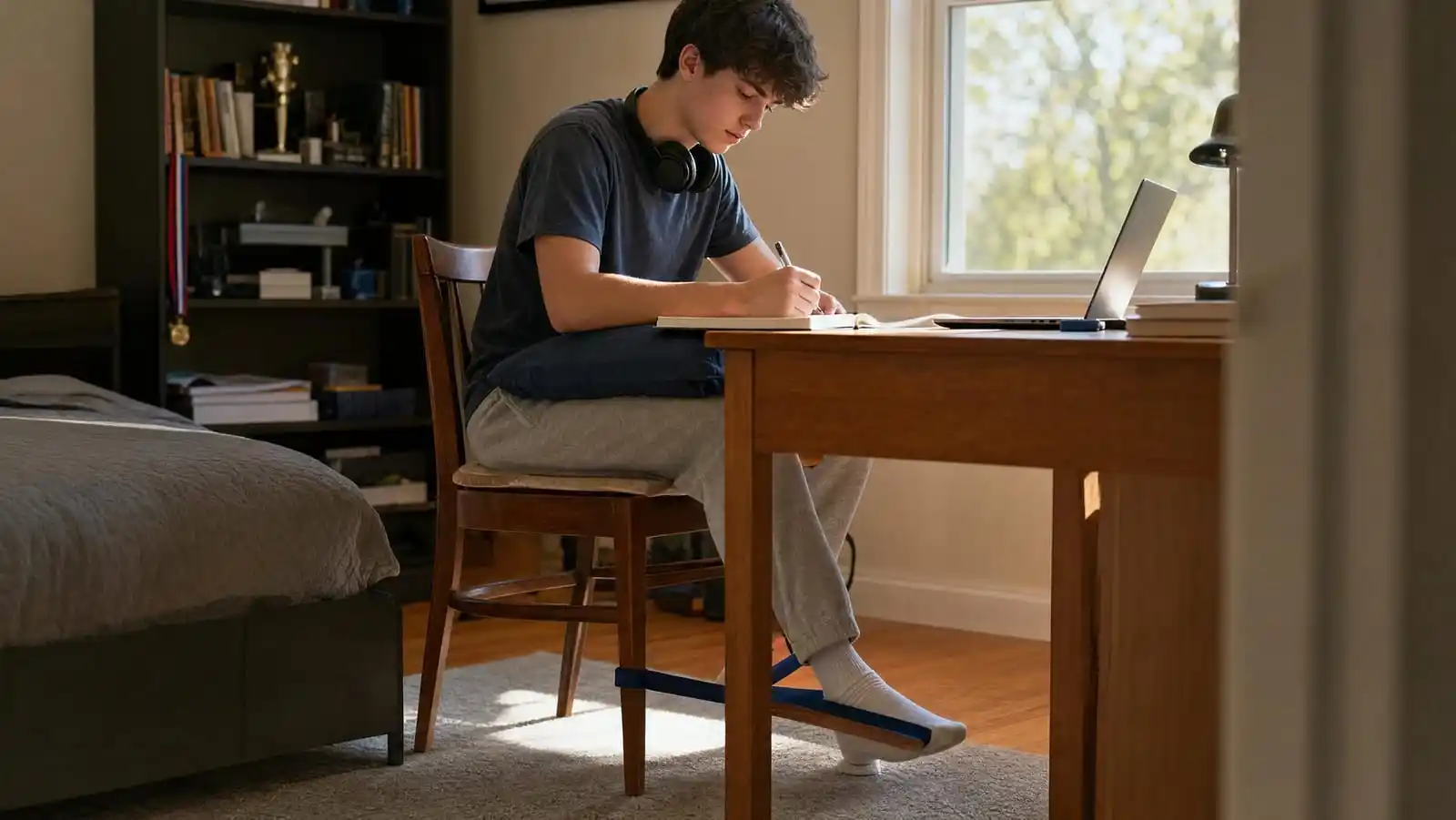
- Can be used during other activities (watching videos, doing homework)
- Low-profile and easy to store
- No installation required
Best for: Children who need subtle, ongoing vestibular input without dramatic movement. Balance boards are excellent for desk work, TV time, or as a "home base" during play.
Clinical research, including a study published in PMC on multi-sensory balance boards for children with ADHD and sensory processing disorders, confirms that balance activities support both motor development and self-regulation.
For specific product recommendations, see our guide to the best balance boards for kids with autism and ADHD.
Spinning Toys and Chairs
Spinning provides intense rotary vestibular input that many sensory seekers crave. Options range from sit-and-spin toys for young children to specialized spinning chairs for older kids and teens.
Benefits:
- Provides powerful vestibular stimulation
- Can be alerting or calming depending on speed and duration
- Often self-directed (child controls the spin)
- Satisfies intense sensory-seeking behaviors
Cautions: Rotary input is powerful. Too much spinning can cause nausea, disorientation, or overstimulation. Always supervise and watch for signs of sensory overload.
Research indicates that 40-60% of autistic children display vestibular stimming behaviors like spinning. Rather than discouraging this natural regulation, spinning toys for vestibular seekers provide a safe outlet.
Scooter Boards
Scooter boards are flat platforms on wheels that children use while lying prone (on their stomach) or sitting. They push themselves across smooth surfaces using their arms or legs.
Benefits:
- Combines vestibular and proprioceptive input
- Strengthens upper body and core
- Encourages motor planning and coordination
- Highly engaging for active children
- Versatile for various activities and games
Best for: Children who enjoy fast movement and physical challenges. Scooter boards are popular in occupational therapy for their combination of sensory input types.
See our recommendations for the best scooter boards for sensory therapy.
How to Choose the Right Sensory Swing
Selecting the right sensory swing involves matching your child's specific needs with practical considerations. Here's a framework for making the best choice.
Consider Your Child's Sensory Profile
Start by observing your child's sensory preferences:
| If Your Child... | Consider... | |------------------|-------------| | Seeks deep pressure, squeezing | Pod or compression swing | | Needs freedom of movement | Platform or hammock swing | | Is easily overwhelmed visually | Enclosed pod swing | | Works on balance and core strength | Platform swing | | Is a teen or large for age | Hammock swing or high-capacity platform | | Is under age 4 | Toddler-specific design with extra support |
For our youngest users, see the guide to swings for toddlers ages 2-4.
Space Requirements
Proper clearance is essential for safety and effective swinging:
- Ceiling height: Minimum 7-8 feet recommended; 9+ feet ideal
- Horizontal clearance: At least 6 feet from walls and obstacles in all directions
- Floor space: Consider the swing's arc plus a safe buffer zone
Smaller spaces may require a doorway mount or standing frame rather than ceiling installation.
Weight Capacity
Always check the manufacturer's weight limit and choose a swing rated well above your child's current weight. This provides:
- Safety margin for growth
- Ability for caregivers to assist or demonstrate
- Durability over years of use
- Option for siblings or therapy partners to join
Most quality sensory swings support 150-300 pounds. Platform swings often support 400-800 pounds.
Budget Considerations
| Budget Range | What to Expect | |--------------|----------------| | $30-$50 | Basic pod swings, simpler construction, may need separate hardware | | $50-$100 | Mid-range options with included hardware, better fabric quality | | $100-$200 | Premium brands (Harkla, Southpaw), superior construction, warranties | | $200-$400 | Professional-grade platform swings, highest weight capacities | | $150-$400 | Standing frames (additional to swing cost) |
For comprehensive guidance on all these factors, see our complete buying guide.
Installation Options Explained
Installing a sensory swing requires careful planning to ensure safety and optimal use. Three main options exist, each with distinct advantages.
Ceiling Mount
Ceiling mounting provides the most secure, permanent installation and allows for the widest range of movement.
Requirements:
- Ceiling joists or structural beams capable of supporting dynamic loads
- Minimum 7-foot ceiling height
- Professional-grade mounting hardware (often included with premium swings)
- Ideally, professional installation or experienced DIYer
Pros:
- Most secure installation
- Widest swing arc
- 360-degree rotation possible
- No floor space taken by frame
Cons:
- Requires structural assessment
- Permanent (or semi-permanent)
- Not suitable for renters without landlord approval
- Professional installation may add cost
Doorway Mount
Doorway bars or mounts allow swing installation in a standard door frame, similar to a pull-up bar.
Requirements:
- Sturdy door frame (standard interior doors often work)
- Bar or mount rated for swing use (not just pull-ups)
- Two suspension points for safety
Pros:
- No permanent modifications
- Easy to install and remove
- Renter-friendly
- Lower cost than ceiling mount
Cons:
- Limited swing arc (back-and-forth only, no spinning)
- Lower weight capacity typically
- Door frame must be sturdy
- Blocks doorway during use
Standing Frame
Standing frames are freestanding structures that support a swing without any installation to your home.
Requirements:
- Floor space for frame footprint
- Assembly according to manufacturer instructions
- Appropriate weight rating
Pros:
- No installation or modifications
- Portable between rooms or homes
- Perfect for renters
- Can be disassembled for storage
Cons:
- Takes up floor space
- Higher initial cost ($150-$400 for frame alone)
- May not allow full 360-degree rotation depending on design
For detailed installation instructions and safety tips, see our guide on how to install a sensory swing.
Top Sensory Swing Brands Compared
Several brands have established reputations for quality, durability, and therapeutic design. Here's an overview of the major players.
Harkla
Known for: Compression swings, included hardware, occupational therapist-designed products.
Harkla is one of the most recognized names in sensory swings. Their compression swing provides both vestibular and deep pressure input, making it popular for children who need combined sensory support. The inclusion of mounting hardware (a $50+ value separately) adds convenience for first-time buyers.
Best for: Families seeking an all-in-one solution with strong OT backing.
Southpaw Enterprises
Known for: Professional-grade therapy equipment used in clinical settings.
Southpaw (now part of a larger therapy equipment company) produces commercial-quality swings and frames designed for occupational therapy clinics. Their products often feature higher weight capacities and more durable construction than consumer options.
Best for: Families wanting clinic-quality equipment at home or those with larger/older children.
For a detailed head-to-head analysis, see our Harkla vs budget swings comparison.
Fun and Function
Known for: Wide product selection, educational resources, OT-curated catalog.
Fun and Function offers numerous sensory swing options alongside a broader catalog of therapeutic toys. Their website includes helpful guides and their products are vetted by occupational therapists.
Best for: Families who want variety and resources alongside their purchases.
Sensory Harbor
Known for: High weight capacity swings designed by neurodiverse individuals.
Sensory Harbor creates sensory swings with input from the autism community. Their cuddle swing supports up to 440 pounds and comes with a lifetime warranty. The company emphasizes inclusive design.
Best for: Teens, adults, or larger users; families who value neurodiversity representation.
Amazon Budget Options
Numerous sensory swings are available on Amazon at lower price points. Brands like OUTREE, Aokitec, and HeySun offer functional swings typically in the $25-$60 range.
Considerations:
- Quality varies more than premium brands
- Hardware may need separate purchase
- Read reviews carefully for weight capacity and durability
- May lack the refined design of therapy-focused brands
Best for: Families on tight budgets or those wanting to test if their child enjoys sensory swings before investing in premium options.
Creating a Sensory Swing Routine
A sensory swing is most effective when integrated into your child's daily routine rather than used sporadically. Here's how to create a sensory swing practice that supports regulation throughout the day.
Session Length and Timing
Most occupational therapists recommend 10-15 minute sessions before challenging transitions or activities. The calming effects of vestibular input can persist for 4-8 hours, so morning sessions often benefit the entire school day.
Suggested routine times:
- Before school: Helps regulate for the school day ahead
- After school: Provides decompression from sensory-intense environment
- Before homework: Improves focus and attention
- Before meals: Supports better regulation during family time
- Before bed: Can aid in calming (use slow, linear movement only)
Incorporating Into a Sensory Diet
A sensory diet is a personalized plan of physical activities and accommodations designed to meet a child's sensory needs throughout the day. Sensory swings fit naturally into this framework.
Example sensory diet with swing integration:
| Time | Activity | Sensory Input | |------|----------|---------------| | 7:00 AM | Morning swing session (10 min) | Vestibular | | 8:00 AM | Walk to school | Proprioceptive | | 10:00 AM | Classroom movement break | Vestibular/Proprioceptive | | 3:30 PM | After-school swing (15 min) | Vestibular | | 5:00 PM | Balance board during TV | Vestibular | | 7:30 PM | Gentle hammock rocking | Calming vestibular |
For equipment-free alternatives, see our guide to vestibular activities without equipment.
Working with Your Child's OT
While sensory swings can be used at home without professional supervision, working with an occupational therapist offers significant advantages:
- Assessment: OT can evaluate your child's specific sensory profile
- Recommendations: Professional guidance on which swing type suits your child
- Training: Proper techniques for therapeutic use
- Monitoring: Adjustments based on your child's progress
- Documentation: May be helpful for school accommodations or insurance
If you're interested in creating a dedicated sensory space, see our guide on building a sensory room on a budget.
Safety Guidelines
Sensory swings are generally safe when properly installed and supervised, but following these guidelines helps prevent accidents and ensures positive experiences.
Weight Limits
Always verify the weight capacity of:
- The swing itself
- The mounting hardware
- The ceiling joist, doorway, or frame
Choose equipment rated well above your child's current weight. Dynamic movement creates forces greater than static weight.
Supervision Requirements
Children should always be supervised during sensory swing use. Even older children and teens benefit from an adult nearby who can:
- Monitor for signs of overstimulation (pale skin, sweating, nausea)
- Prevent unsafe behavior (standing when they shouldn't, spinning too fast)
- Assist with getting in and out safely
- Control session length
Hardware Quality
For ceiling-mounted installations:
- Use hardware rated for swing or climbing applications (not general-purpose)
- Verify mounting into structural beams, not just drywall
- Consider professional installation for ceiling mounts
- Regularly inspect hardware for wear, loosening, or damage
Age-Appropriate Swinging
| Age Group | Considerations | |-----------|----------------| | Under 2 | Not generally recommended without OT guidance | | 2-4 years | Toddler-specific swings with extra support | | 5-8 years | Most standard sensory swings appropriate | | 9-12 years | Check weight capacity; may need larger options | | Teens/Adults | High-capacity swings (hammock, platform, or specialty) |
When NOT to Use a Sensory Swing
Avoid sensory swing use:
- If your child has certain medical conditions (ear infections, inner ear disorders, seizure disorders) without medical clearance
- When the child is already overstimulated or in meltdown
- Immediately after eating
- If the child expresses genuine fear (not initial hesitation)
- If equipment shows any signs of damage or wear
Consult with your child's healthcare provider if you have any concerns about vestibular activities.
Frequently Asked Questions
Are sensory swings covered by insurance?
Sensory swings are generally not covered by standard health insurance as they're considered durable medical equipment for home use. However, some families have had success with:
- FSA/HSA accounts: Many Flexible Spending and Health Savings Accounts allow sensory equipment purchases
- Medicaid waivers: Some state programs cover sensory equipment for children with autism
- Private insurance appeals: With a letter of medical necessity from an OT, some families have obtained coverage
- School funding: IEPs sometimes include sensory equipment for classroom use
- Nonprofit grants: Organizations like ACT Today! and Autism Care Today offer grants for sensory equipment
How long should a child use a sensory swing?
Most occupational therapists recommend 10-15 minute sessions, 1-3 times daily. However, optimal duration depends on:
- Your child's individual sensory needs
- The type of movement (calming linear vs. alerting rotary)
- The child's response (some regulate quickly, others need longer)
- Whether it's part of a broader sensory diet
Watch your child for signs of optimal regulation (calmer, more focused) or overstimulation (agitation, nausea). Adjust session length accordingly.
Can sensory swings help with sleep?
Many parents report improved sleep when incorporating sensory swings into bedtime routines. The key is using calming, linear movement (gentle back-and-forth rocking) rather than alerting rotary movement (spinning).
A 2015 study found that deep pressure input, similar to what compression swings provide, reduced anxiety in inpatient settings. While research specifically on swings and sleep is limited, the regulation benefits of vestibular input may support better sleep transitions.
For comprehensive sleep strategies that combine vestibular input with other approaches, see our complete guide to sleep and bedtime sensory solutions. Pre-bed swinging (10-15 minutes of gentle, linear motion) can be an effective part of a bedtime routine for sensory seekers.
What's the difference between a therapy swing and regular swing?
| Feature | Therapy Swing | Playground Swing | |---------|---------------|------------------| | Design focus | Therapeutic outcomes | Recreation | | Movement types | Multiple (linear, rotary, enclosed) | Primarily linear | | Sensory input | Often combined (vestibular + proprioceptive) | Vestibular only | | Materials | Sensory-friendly fabrics, compression options | Standard seat and chains | | Installation | Indoor/outdoor, various mounting options | Outdoor structures | | Clinical backing | Often OT-designed or recommended | Not typically |
Therapy swings are engineered specifically for sensory regulation needs rather than general play, though they can certainly be fun.
At what age can a child use a sensory swing?
Most sensory swings are designed for children 3 years and older. However:
- Under 2 years: Not typically recommended due to developing vestibular systems and neck strength; consult an OT
- 2-3 years: Some toddler-specific swings available; close supervision essential
- 3+ years: Most standard sensory swings appropriate with supervision
- Teens and adults: High-capacity options available (hammock, platform, specialty compression)
When in doubt, consult with your child's pediatrician or occupational therapist.
Do occupational therapists recommend sensory swings?
Yes. Sensory swings are among the most commonly recommended vestibular tools by occupational therapists specializing in sensory processing. A 2024 systematic review in the journal Children confirmed that sensory integration therapy, including vestibular activities like swinging, can positively affect motor, cognitive, social, and communication skills in children with autism.
OTs recommend sensory swings because they provide controlled, predictable vestibular input that can be adjusted to each child's needs. For best results, work with your child's OT to determine which swing type suits their sensory profile.
Conclusion
Sensory swings and vestibular toys aren't just accessories. For many children with autism and ADHD, they're essential tools for self-regulation, focus, and calm.
The research is clear: controlled vestibular input supports the nervous system in ways that benefit attention, emotional regulation, and even motor skills. With 69-96% of autistic children experiencing sensory processing challenges, providing appropriate sensory tools isn't optional. It's fundamental.
Key takeaways from this guide:
- The vestibular system matters: Located in the inner ear, it affects balance, coordination, and regulation
- Different swings serve different needs: Pod swings for compression seekers, platform swings for flexibility, hammock swings for older users
- Beyond swings: Balance boards, spinning toys, and scooter boards complement swinging activities
- Installation options vary: Ceiling, doorway, or standing frame, each with trade-offs
- Routine integration: 10-15 minutes before transitions provides lasting regulation
- Safety first: Proper installation, supervision, and age-appropriate equipment
We recommend consulting with your child's occupational therapist to determine which vestibular tools best match their unique sensory profile. Every child is different, and personalized guidance ensures the best outcomes.
Ready to find the right sensory swing for your child? Start with our guide to the best sensory swings for autism, featuring 10 OT-recommended options at various price points.
Your child's nervous system is seeking what it needs. With the right tools, you can help them find it.