This article contains affiliate links. We may earn a commission if you make a purchase through our links, at no extra cost to you.
Does Swinging Actually Help? Here's What the Research Says
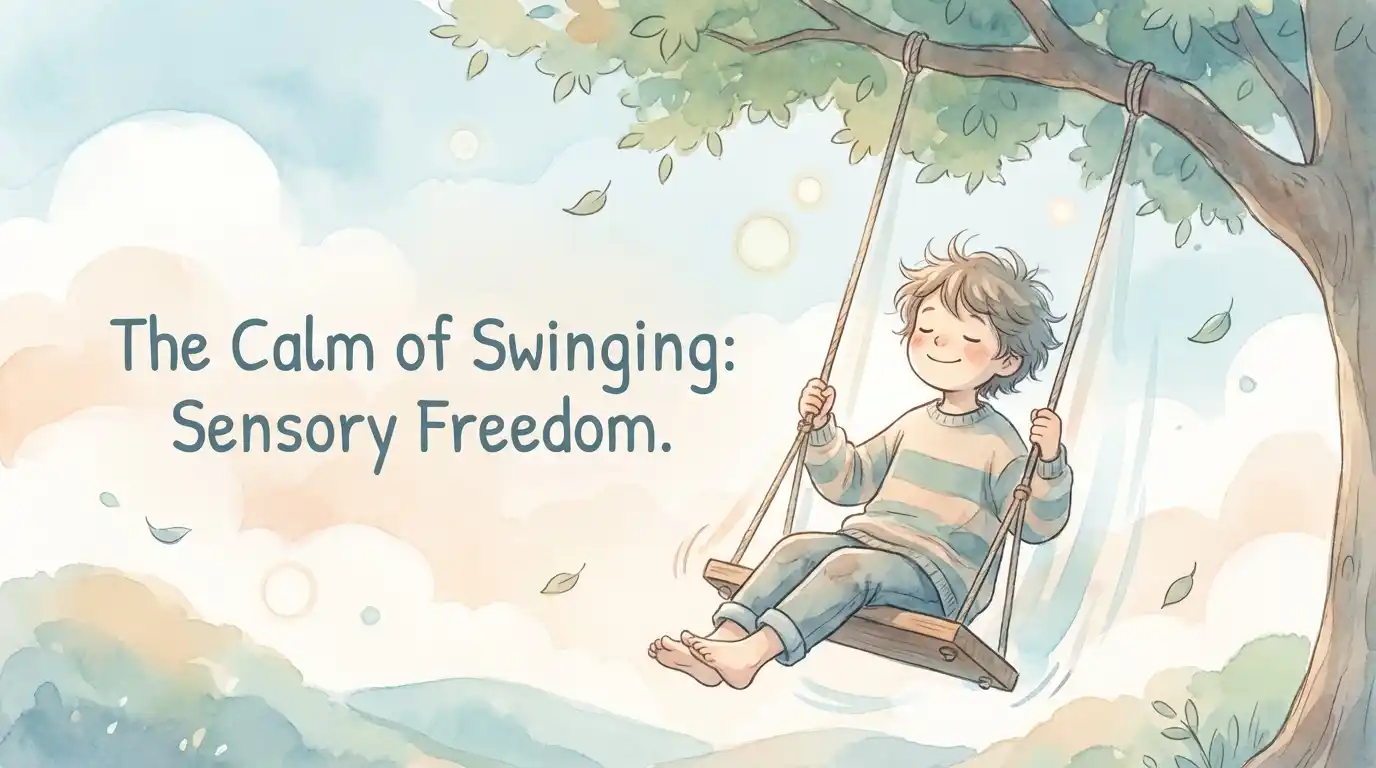
You've seen sensory swings everywhere—occupational therapy clinics, special needs classrooms, Instagram feeds full of serene-looking children in cocoon swings. But does swinging actually help autistic children, or is it another wellness trend with more marketing than substance?
The short answer: yes, swinging helps. And unlike many interventions, this one has real research behind it.
A 2025 randomized controlled trial—the gold standard of research—found that vestibular exercises (including swinging) significantly reduced hyperactivity and impulsivity in children with autism. We're not talking about a small improvement; the study showed statistically significant results (p < 0.001, meaning this finding is highly unlikely to be due to chance).
But that's just one benefit. There are at least seven distinct, research-supported ways that swinging can help autistic children—from improving focus to supporting emotional regulation.
For a comprehensive overview of swing types and vestibular equipment, see our sensory swings and vestibular toys guide. In this article, we focus specifically on why swinging works and what the science says.
How the Vestibular System Works
Before we dive into benefits, let's understand why swinging is so powerful for many autistic children.
What Is the Vestibular System?
The vestibular system lives in your inner ear. It's your body's motion detection center—constantly sensing where you are in space, which way is up, and how fast you're moving.
This system handles:
- Balance: Keeping you upright and stable
- Spatial orientation: Knowing where your body is in relation to your surroundings
- Body awareness: Understanding how your limbs are positioned
- Coordination: Connecting what you sense with how you move
The vestibular system sends signals to your brain about every head movement, every shift in position. These signals help your brain coordinate movement, maintain focus, and regulate arousal levels.
Why Autistic Children Often Need More Vestibular Input
Many children with autism have vestibular processing differences. Their nervous systems may not process motion signals the same way neurotypical children do.
This shows up in two main ways:
Sensory-seeking children crave movement. They may spin constantly, rock back and forth, jump repeatedly, or crash into things. Their nervous systems need more vestibular input to feel regulated.
Sensory-avoidant children may become overwhelmed by motion. They might avoid swings at the playground, feel car sick easily, or become distressed when picked up unexpectedly.
Here's what's interesting: swinging can help both types of children.
For sensory seekers, swinging provides the organized, consistent input their nervous systems crave—without the chaotic, potentially dangerous movements they might otherwise seek.
For sensory avoiders, gentle, controlled swinging—especially in an enclosed, secure swing—can gradually help their nervous systems tolerate and integrate motion.
The 7 Science-Backed Benefits of Swinging
Let's look at what the research actually shows.
Benefit #1: Reduces Hyperactivity and Impulsivity
This is perhaps the most robust finding in recent research.
A 2025 randomized controlled trial by Erik, Safran, and Şevgin studied children with mild-to-moderate autism, comparing those who received vestibular and proprioceptive exercises (including swinging) to those who received standard physiotherapy alone.
The results were striking. Children in the vestibular exercise group showed significant reductions in hyperactivity and impulsivity, measured using the Vanderbilt ADHD Diagnostic Parent Rating Scale. The improvement was statistically significant at p < 0.001—meaning it's extremely unlikely to be due to chance.
Why it works: Vestibular input helps regulate arousal levels. When a child's nervous system gets the organized movement input it needs, the drive for disorganized, hyperactive movement decreases. The body stops seeking what it already has. For more on this topic, see our guide to how vestibular therapy helps ADHD.
Benefit #2: Improves Emotional Regulation
One of the most consistent findings across sensory integration research is improved emotional regulation.
A systematic review published in The American Journal of Occupational Therapy (Schaaf et al., 2018) found that sensory-based interventions—including those using vestibular input—were associated with improved emotional regulation and functional participation in children with autism.
Why it works: Swinging activates the parasympathetic nervous system—the "rest and digest" mode that opposes fight-or-flight. The rhythmic, predictable motion helps shift the nervous system away from stress and toward calm.
For children who struggle with emotional dysregulation, this isn't just about feeling calm in the moment. Regular vestibular input can help build the neural pathways that support regulation over time.
Benefit #3: Enhances Focus and Attention
Many parents and teachers report that children focus better after swinging—and research supports this observation.
Vestibular input appears to "wake up" the nervous system in a way that supports attention. This is why occupational therapists often recommend swinging before challenging cognitive tasks like homework or therapy sessions.
According to the STAR Institute for Sensory Processing, vestibular input helps organize the nervous system, which in turn supports the ability to attend and concentrate. A calmer, more organized nervous system is better equipped to filter distractions and sustain attention.
Why it works: The vestibular system has direct connections to areas of the brain involved in attention and arousal. Providing organized vestibular input helps prepare these systems for focused work.
Benefit #4: Improves Balance and Motor Coordination
The connection here is direct: the vestibular system controls balance, and swinging stimulates the vestibular system.
Research by Chisari and colleagues, published in the Journal of Clinical Medicine (2024), documented the relationship between vestibular function and postural control in children with autism. Children with ASD often show postural control deficits, and the research suggests these are connected to vestibular processing differences.
Regular swinging strengthens the vestibular-motor connections that support balance and coordination. Over time, children may show improvements in:
- Standing and sitting balance
- Coordination during movement
- Body awareness during physical activities
- Motor planning for new movements
Why it works: Swinging provides repeated, controlled vestibular stimulation that helps calibrate the system. The brain gets practice processing motion signals and coordinating motor responses.
Benefit #5: Supports Sensory Integration
Sensory integration is the brain's ability to organize and make sense of information from all the senses. Many autistic children struggle with this process—leading to sensory overload, difficulty with transitions, and challenges filtering important information from background noise.
Swinging provides organizing input that can help the brain process sensory information more effectively. According to the STAR Institute, vestibular input helps both sensory seekers (who are under-responsive) and sensory avoiders (who are over-responsive) because it helps calibrate the entire sensory system.
Why it works: The vestibular system acts as a kind of foundation for sensory processing. When it's well-regulated, other sensory systems often work better too. This is why occupational therapists often start sensory integration sessions with vestibular activities.
Benefit #6: Enhances Communication and Engagement
This benefit might surprise some, but research has found connections between vestibular input and communication.
A study published in the Journal of Occupational Therapy, Schools, & Early Intervention (2023) found that children's communication responses increased significantly after receiving vestibular input. Specifically, children using picture exchange communication showed more consistent requesting behaviors after swinging.
Why it works: When a child's nervous system is regulated, they have more capacity for social interaction and communication. Energy that was going toward managing sensory distress can instead go toward engagement. Additionally, the calm, focused state that follows swinging may simply create better conditions for learning and communication.
Benefit #7: Provides Calming and Self-Regulation
For many autistic children, swinging becomes a go-to tool for self-regulation—and for good reason.
Compression-style sensory swings add proprioceptive input (deep pressure) to vestibular input, creating a powerful calming combination. The enclosing fabric provides consistent pressure while the swinging motion stimulates the vestibular system.
The rhythmic, predictable nature of swinging is inherently calming. Unlike unexpected touch or sudden movement, swinging provides consistent, controllable sensory input. Children can often learn to use the swing independently when they feel dysregulated.
Why it works: Predictability reduces anxiety. Deep pressure activates the parasympathetic nervous system. Rhythmic motion is soothing at a neurological level. Together, these elements create a powerful self-regulation tool.
What the Research Actually Says: An Honest Assessment
We've presented seven research-backed benefits—but it's important to be honest about what the evidence shows and doesn't show.
Strong Evidence
The evidence for vestibular input in autism therapy is genuinely encouraging:
- Recent randomized controlled trials show significant, measurable improvements
- Systematic reviews have found positive outcomes for sensory-based interventions
- Vestibular activities are widely used by occupational therapists with clinical success
- Research connects vestibular function directly to balance, motor control, and regulation
The 2025 RCT we cited is particularly notable because RCTs are the most rigorous form of research. Finding statistically significant results (p < 0.001) in this format is meaningful.
Limitations and Ongoing Research
That said, the research picture isn't perfect:
- The NICE guidelines note that more research is needed on specific sensory approaches
- Not all studies show conclusive results—some have mixed findings
- Individual responses vary significantly—what helps one child may not help another
- Long-term outcomes need more study
- Some systematic reviews have found limited evidence for certain sensory interventions
A comprehensive review by Case-Smith et al. found that while some studies showed positive effects for vestibular stimulation, the evidence was mixed across studies with different designs and quality levels.
The Bottom Line
The evidence supports using swinging as part of a sensory approach for autistic children—but with realistic expectations:
- It's one tool in a comprehensive approach, not a standalone cure
- Individual children respond differently; what works varies
- It works best when tailored to the specific child's sensory profile
- Consultation with an occupational therapist can help individualize the approach
Swinging isn't magic. But it's also not hype. The research shows real benefits for many children.
How to Use Sensory Swings Effectively
Understanding the benefits is step one. Using swings effectively is step two.
Guidelines from Occupational Therapy Practice
Occupational therapists have decades of clinical experience with sensory swings. Here's what they generally recommend:
Duration: Start with 10-15 minutes of swinging per session. Some children benefit from shorter, more frequent sessions; others prefer longer sessions. Watch for signs of overstimulation (nausea, withdrawal, increased agitation) and adjust accordingly.
Timing: Use swinging before challenging tasks for optimal regulation. Ten minutes of swinging before homework, therapy, or a difficult transition can make a significant difference.
Consistency: Regular, consistent use works better than occasional long sessions. Daily swinging—even just 10-15 minutes—builds the regulatory benefits over time.
Motion type: Linear swinging (back and forth) is generally calming. Spinning is more alerting and should be used carefully—some children become overstimulated with spinning. Let the child guide what type of motion feels best.
Creating a Sensory Routine
Consider building swinging into your daily schedule:
- Morning: 10-15 minutes after waking to start the day regulated
- Before transitions: Brief swing session before school, appointments, or challenging activities
- After school: Swing to decompress from the sensory demands of the school day
- Before bed: Gentle, linear swinging can support wind-down for sleep (avoid spinning close to bedtime). See our bedtime routine for sensory seekers for a complete pre-sleep movement protocol.
For guidance on choosing the right swing, see our sensory swing buying guide.
Getting Started
If you're new to sensory swings:
-
Consult an occupational therapist if possible. They can assess your child's specific sensory profile and recommend appropriate activities.
-
Start slow. Introduce the swing gradually, especially for sensory-avoidant children. Let them explore at their own pace.
-
Follow your child's lead. Some children want compression swings; others prefer open hammock styles. Some crave spinning; others find it overwhelming. The Harkla Sensory Swing is a popular starting point for many families due to its versatility and OT-recommended design.
-
Set up safely. See our guide on how to install a sensory swing for step-by-step installation instructions.
Frequently Asked Questions
How long should my child swing for benefits?
Most occupational therapists recommend 10-15 minutes per session, with daily use for best results. However, some children benefit from shorter or longer sessions. Watch for signs of overstimulation and adjust based on your child's responses.
Can swinging help with meltdowns?
Swinging is often more effective as prevention than intervention. Regular swinging can reduce the frequency of meltdowns by keeping the nervous system better regulated. During an active meltdown, however, a child may be too dysregulated to use the swing effectively. Some children find gentle swinging calming during the recovery phase after a meltdown.
Is swinging safe for all autistic children?
Swinging is safe for most children when properly supervised with appropriate equipment. However, some children with seizure disorders, severe vestibular hypersensitivity, or certain medical conditions may need special considerations. Consult your child's healthcare provider or occupational therapist if you have concerns.
What type of swing motion is best?
It depends on the child and the goal:
- Linear swinging (back and forth): Generally calming, good for regulation
- Rotational movement (spinning): More alerting, stimulating—use carefully
- Orbital patterns (circles): Falls between linear and spinning in intensity
Start with gentle linear swinging and observe your child's response before introducing other movements.
How often should my child use a sensory swing?
Daily use of 10-15 minutes typically provides the most benefit. Consistency matters more than duration—regular brief sessions build regulation over time more effectively than occasional long sessions.
Conclusion: The Science Supports What Parents Observe
When parents say "the swing helps," they're not imagining things. The research increasingly supports what families have observed: swinging provides real, measurable benefits for many autistic children.
The seven benefits we've covered—reduced hyperactivity, improved emotional regulation, enhanced focus, better balance, supported sensory integration, increased engagement, and calming self-regulation—are all backed by peer-reviewed research.
That said, swinging isn't a cure. It's one tool in a comprehensive approach to supporting autistic children. It works best when:
- Tailored to the individual child's sensory needs
- Used consistently as part of a daily routine
- Combined with other sensory strategies and supports
- Guided by an occupational therapist when possible
If you're ready to explore sensory swings for your child, see our roundup of the best sensory swings for autism. For the complete picture of vestibular equipment options, visit our complete vestibular toys guide.
The research is clear: for many autistic children, swinging isn't just fun. It's therapeutic.