This article contains affiliate links. We may earn a commission if you make a purchase through our links, at no extra cost to you.
Key Takeaways
- 50-80% of children with autism and up to 70% of children with ADHD experience significant sleep difficulties
- Sleep problems are sensory problems—addressing sensory needs directly improves sleep
- The four pillars of sensory sleep: Environment, Deep Pressure, Routine, and Regulation
- Different ages require different approaches: toddler safety vs. teen autonomy
- Most sleep improvements come from addressing the hour before bed, not just the bedroom
When bedtime becomes a nightly battle, it's exhausting for everyone. Your child isn't being difficult—their nervous system is struggling to downshift from daytime alertness to sleep readiness. This is one of the most common challenges families of neurodivergent children face, yet it's rarely discussed in terms of what actually helps: sensory solutions.
Research published in the Journal of Autism and Developmental Disorders consistently shows that 50-80% of children with autism experience significant sleep disturbances—compared to about 25% of neurotypical children. For children with ADHD, studies in Sleep Medicine Reviews indicate sleep problems affect up to 70% of cases. These aren't separate issues from sensory processing differences—they're directly connected.
This comprehensive guide covers everything parents need to know about creating sensory-supportive sleep environments, establishing effective bedtime routines, and using evidence-based tools to help children with autism, ADHD, and sensory processing disorder get the rest they need.
Table of Contents
- The Sensory-Sleep Connection
- The Four Pillars of Sensory Sleep
- Creating a Sensory-Friendly Bedroom
- Deep Pressure Tools for Sleep
- Building Effective Bedtime Routines
- Age-Specific Sleep Challenges
- Common Sleep Problems and Solutions
- Frequently Asked Questions
The Sensory-Sleep Connection
Sleep isn't just about being tired—it's a complex neurological process that requires the brain to transition from an alert, active state to a calm, receptive one. For children with sensory processing differences, this transition is often disrupted.
Why Sensory Processing Affects Sleep
The same nervous system that processes sensory input all day must calm down enough for sleep. When sensory processing is atypical, several problems emerge:
Hyperarousal: Many children with autism and ADHD have chronically elevated arousal levels. Their nervous systems run "hotter" than typical, making the downshift to sleep physiologically harder.
Sensory sensitivities: A tag that's barely noticeable during the day becomes unbearable when there's nothing else to focus on. The quiet of nighttime amplifies sensory awareness—suddenly every texture, sound, and temperature matters more.
Difficulty with transitions: Sleep is the ultimate transition, and transitions are notoriously difficult for neurodivergent children. The shift from active to passive, from stimulation to stillness, requires executive function skills that may be underdeveloped.
Circadian rhythm differences: Research suggests that children with autism may have differences in melatonin production and circadian rhythm regulation, making natural sleep onset harder to achieve.
The Bidirectional Relationship
Sleep problems and sensory processing difficulties feed each other in a vicious cycle:
| Sleep Deprivation Effects | Sensory Processing Effects | |---------------------------|---------------------------| | Increased sensory sensitivity | Harder time filtering input | | Reduced emotional regulation | More meltdowns and dysregulation | | Decreased focus and attention | Increased seeking or avoiding behaviors | | Heightened anxiety | Greater difficulty with transitions |
Breaking this cycle requires addressing both sides—using sensory tools to improve sleep, while recognizing that better sleep will improve daytime sensory processing.
What Research Shows
A 2020 study in Research in Autism Spectrum Disorders found that sensory processing patterns significantly predicted sleep problems in children with autism. Specifically, children with sensory over-responsivity (hypersensitivity) had the most severe sleep difficulties. This finding points directly to environmental and sensory interventions as frontline sleep solutions.
The Four Pillars of Sensory Sleep
After reviewing the research and talking to occupational therapists and sleep specialists, we've identified four key areas that must be addressed for children with sensory processing differences to sleep well.
Pillar 1: Sensory Environment
The bedroom itself must support sleep rather than interfere with it. This means controlling:
- Light: Complete darkness for light-sensitive children; dim red-spectrum lights for those who need some illumination
- Sound: White noise to mask unpredictable sounds; complete quiet for auditory-sensitive children
- Temperature: Typically cooler (65-70°F) supports sleep; individual preferences vary
- Textures: Bedding that matches tactile preferences (smooth for avoiders, textured for seekers)
- Smells: Eliminating strong scents; some children benefit from calming aromatherapy
For a complete guide to bedroom setup, see our article on creating a sensory-friendly bedroom.
Pillar 2: Deep Pressure Input
Deep pressure is one of the most universally calming sensory inputs. It activates the parasympathetic nervous system—the body's "rest and digest" mode—making it ideal for pre-sleep and during sleep.
Key deep pressure tools:
- Weighted blankets: The most popular sleep tool; typically 10% of body weight
- Compression pajamas: Consistent, all-over pressure without heat
- Weighted sleep sacks: Safe option for younger children
- Tight sheet tucking: A no-cost option that many children find calming
Research reviewed by the Sleep Foundation shows weighted blankets can reduce anxiety and improve sleep quality by increasing serotonin and reducing cortisol.
For detailed product recommendations, see our guide to the best weighted blankets for children with autism and ADHD.
Pillar 3: Predictable Routines
Children with autism and ADHD often struggle with transitions, and bedtime is the biggest transition of the day. A consistent, predictable routine provides:
- Clear expectations: The child knows exactly what comes next
- Gradual wind-down: Activity levels decrease step by step
- Sensory preparation: Strategic input prepares the nervous system for sleep
- Emotional safety: Familiar patterns reduce anxiety
The ideal bedtime routine for sensory seekers includes movement activities early, transitions to deep pressure, and ends with calming, predictable elements.
For specific routine strategies, see our article on bedtime routines for sensory seekers.
Pillar 4: Emotional Regulation
Anxiety is one of the biggest barriers to sleep for neurodivergent children. The quiet of bedtime allows worries to grow louder. Effective sleep preparation includes:
- Processing the day: Brief time to talk about events (but not right before sleep)
- Anxiety management tools: Worry stones, weighted stuffed animals, breathing exercises
- Clear boundaries: Knowing that parents are available but the expectation is sleep
- Self-soothing skills: Age-appropriate tools the child can use independently
For children who struggle with bedtime anxiety, our guide to bedtime anxiety and sensory tools covers specific strategies.
Creating a Sensory-Friendly Bedroom
The bedroom environment is the foundation of sleep success. Every sensory system needs to be considered.
Light Control
Light is the primary signal to the brain about whether it's time to be awake or asleep. For sensory-sensitive children, even small amounts of light can interfere with sleep.
Solutions by light sensitivity level:
| Sensitivity | Environment | Tools | |-------------|-------------|-------| | High (needs complete dark) | Blackout curtains + door seal | Light-blocking tape for electronics | | Moderate | Blackout blinds | Red-spectrum nightlight (if needed) | | Low (needs some light) | Dim, warm-toned lighting | Salt lamp or dimmable nightlight |
Blue light from screens is particularly disruptive. The American Academy of Pediatrics recommends no screens for at least one hour before bedtime, which is even more important for children with sensory processing differences.
For specific product recommendations, see our guide to blackout solutions for light-sensitive kids.
Sound Environment
Auditory processing differences mean sound can either help or hurt sleep dramatically.
For children who are auditory sensitive:
- White noise machines mask unpredictable environmental sounds
- Fan sounds provide consistent, non-alerting background noise
- Nature sounds (rain, ocean) work for some but can be too variable for others
For children who are auditory seeking:
- May need sound to feel comfortable
- Consistent, predictable sounds work better than silence
- Consider audiobooks or calm music during wind-down (but not during actual sleep)
Our guide to the best white noise machines for sensory-sensitive children compares the top options.
Temperature and Tactile Environment
Bedding choices matter enormously for tactile-sensitive children:
- Sheets: Bamboo or high-thread-count cotton for smooth-seekers; jersey knit for those who like texture
- Pajamas: Tagless, seamless options; compression pajamas for proprioceptive seekers
- Blankets: Weight, texture, and breathability all matter
- Pillow: Firmness and cover texture based on individual preferences
Temperature typically should be cooler (65-70°F), as the body naturally cools during sleep. However, some sensory-seeking children prefer warmth—listen to your child's preferences.
Deep Pressure Tools for Sleep
Deep pressure input is the cornerstone of sensory-based sleep intervention. It works by stimulating the parasympathetic nervous system, reducing cortisol, and increasing feel-good neurotransmitters.
Weighted Blankets
The most popular and well-researched deep pressure sleep tool.
General guideline: 10% of body weight, plus 1-2 pounds. A 50-pound child would use a 5-7 pound blanket.
Key considerations:
- Never use weighted blankets on children under 2 or those who can't remove them independently
- Breathability matters—look for blankets designed to reduce heat retention
- Washability is important for longevity
- Size should cover the body without hanging over the bed edges (risk of sliding off)
Research on weighted blankets shows promising results for both autism and ADHD. A study in the Journal of Sleep Medicine & Disorders found that weighted blankets helped participants fall asleep faster and have fewer nighttime awakenings.
Compression Pajamas and Sleep Sacks
For children who find weighted blankets too hot or heavy:
- Compression pajamas provide consistent, all-over pressure
- Weighted sleep sacks offer a safe alternative for toddlers and young children
- Compression sheets (like Lycra sheets that stretch over the mattress) provide pressure without weight
These options are particularly useful for children who move a lot during sleep and might kick off a weighted blanket.
See our detailed guide to weighted sleep sacks and compression pajamas.
Weighted Stuffed Animals
For children who resist other deep pressure tools:
- Provide comforting weight in a non-threatening form
- Can be held, cuddled, or placed on the lap/chest
- Often more acceptable to children who reject "therapeutic" items
- Work well as transitional objects for anxiety management
Building Effective Bedtime Routines
The bedtime routine is where sensory strategies come together. The goal is a gradual, predictable transition from active wakefulness to sleep readiness.
Timing and Structure
Start early enough: Most sensory-focused bedtime routines need 30-60 minutes. Rushing creates stress that interferes with sleep.
Consistent timing: The same start time and sequence every night builds expectation and reduces resistance.
End screens at least 60 minutes before sleep: Blue light exposure suppresses melatonin. For sensory-sensitive children, the stimulation from screens is even more activating.
The Sensory Routine Sequence
An effective sensory bedtime routine moves through three phases:
Phase 1: Heavy Work (30+ minutes before bed)
- Provides proprioceptive input that regulates the nervous system
- Activities: Wall pushes, animal walks, carrying laundry, resistance band pulls
- This is also a good time for pre-bed vestibular input like gentle swinging
Phase 2: Deep Pressure (15-30 minutes before bed)
- Transitions from active to passive
- Activities: Massage, joint compressions, "burrito" wrapping in blankets
- Apply lotion with firm pressure, brush hair, or use a weighted lap pad during stories
Phase 3: Calm Connection (Final 10-15 minutes)
- Predictable, quiet bonding
- Activities: Reading together, quiet conversation, listening to calm music
- Deep breathing or progressive muscle relaxation
For detailed routine scripts by age, see our bedtime routine strategies for sensory seekers.
Visual Schedules and Timers
Many children with autism and ADHD benefit from visual supports during bedtime routines:
- Picture schedules: Show each step of the routine in order
- Visual timers: Make the passage of time concrete ("when the red is gone, lights out")
- First/then boards: "First brush teeth, then one story"
These supports reduce verbal prompting (which can feel nagging) and give children a sense of control over the process.
Age-Specific Sleep Challenges
Sleep challenges look different at each developmental stage, and solutions must be age-appropriate.
Toddlers (Ages 1-3)
Unique challenges:
- Cannot communicate sleep difficulties verbally
- Safety concerns limit tool options (no weighted blankets, no small parts)
- Still developing circadian rhythms
- May be transitioning from crib to bed
Sensory solutions:
- Compression sleep sacks (designed for toddler safety)
- White noise (consistent, not music with variable patterns)
- Complete darkness or very dim red light
- Firm tucking of blankets ("burrito baby")
- Consistent pre-sleep massage routine
For comprehensive guidance, see sleep solutions for toddlers with sensory needs.
School-Age (Ages 4-12)
Unique challenges:
- Homework and activities can push bedtime later
- Social awareness may make children resist "baby" tools
- Increasing ability to verbalize needs but not always accurately
- May resist routine when seeking independence
Sensory solutions:
- Weighted blankets (appropriate weight for body size)
- Choice within structure ("which pajamas tonight?")
- Movement breaks earlier in evening to burn energy
- Social stories about why bedtime routines matter
- Gradual independence building (doing steps alone with parent nearby)
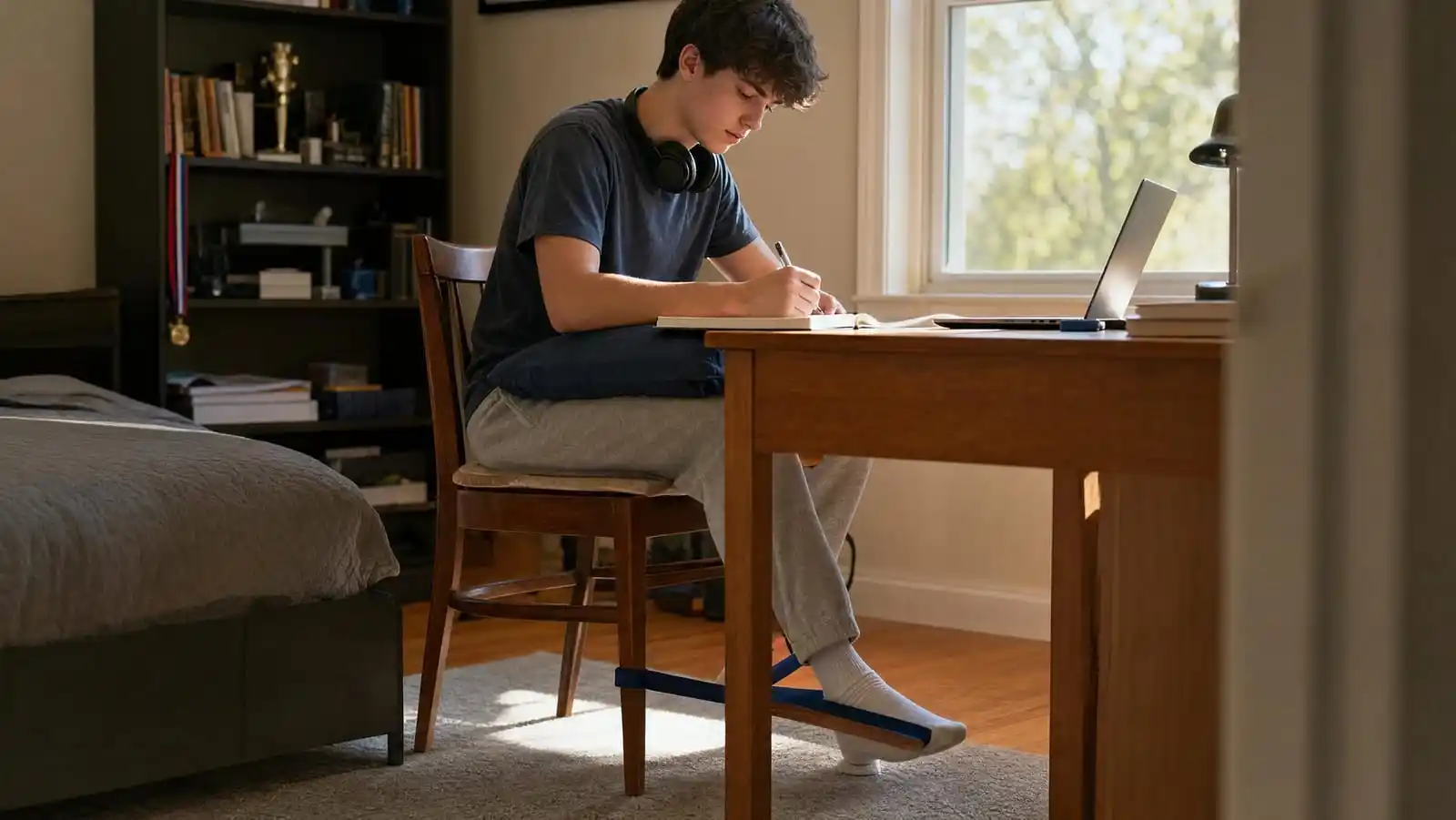
Teens (Ages 13+)
Unique challenges:
- Circadian rhythm naturally shifts later (biological, not behavioral)
- Screen use often increases
- May reject "childish" sensory tools
- Need for autonomy conflicts with need for routine
Sensory solutions:
- Discreet weighted blankets (look like regular bedding)
- White noise apps on phone (already in room anyway)
- Compression undershirts or athletic wear as pajamas
- Collaboratively designed routines (teen has input)
- Focus on explaining why sensory tools work (teens respond to logic)
For teen-specific strategies, see teen sleep and sensory processing.
Common Sleep Problems and Solutions
Even with good sensory foundations, specific sleep problems often arise.
Problem: Difficulty Falling Asleep
Sensory causes:
- Environment not conducive to sleep (light, sound, temperature)
- Nervous system still in alert state
- Anxiety creating mental alertness
Sensory solutions:
- Audit the bedroom environment for sensory triggers
- Add more calming sensory input to the pre-bed routine (deep pressure, proprioceptive work)
- Consider weighted blanket or compression pajamas
- Address anxiety with calming tools
Problem: Night Waking
Sensory causes:
- Environmental changes during the night (temperature shifts, sounds)
- Blankets displaced, removing deep pressure
- Internal sensory needs (need to move, need to eliminate)
Sensory solutions:
- White noise throughout the night (not just for falling asleep)
- Compression pajamas that stay in place unlike blankets
- Dimmable motion-sensor nightlight for bathroom trips
- Weighted stuffed animal child can find independently
For comprehensive strategies, see night waking solutions for sensory kids.
Problem: Early Morning Waking
Sensory causes:
- Light entering room as sun rises
- Hunger (common in ADHD)
- Ambient sounds increasing with morning activity
- Body temperature rising
Sensory solutions:
- Blackout solutions that block early morning light
- White noise to mask morning sounds
- Bedside snack (healthy, non-stimulating) for hungry wakers
- "Okay to wake" clock providing clear visual cue
Problem: Bedtime Resistance and Anxiety
Sensory causes:
- Association between bedroom and negative experiences
- Fear of the dark or silence (sensory deprivation)
- Overwhelm from the day's sensory experiences
Sensory solutions:
- Build positive associations (special bedtime-only activity)
- Address specific sensory fears (nightlight, white noise)
- Add self-soothing tools child can use independently
- Front-load sensory processing time earlier in evening
Frequently Asked Questions
At what age can children use weighted blankets?
Most manufacturers and safety experts recommend weighted blankets only for children age 3 and older who can remove the blanket independently. The child should be able to lift and push off the blanket without assistance. Never use weighted blankets with infants or toddlers in cribs, as this poses a suffocation risk.
How heavy should a weighted blanket be?
The general guideline is 10% of body weight plus 1-2 pounds. However, this is a starting point—some children prefer heavier or lighter options. A 60-pound child would typically start with a 6-8 pound blanket. Always consult with an occupational therapist if you're unsure, and never use a blanket so heavy the child can't remove it independently.
Do white noise machines actually help?
Research supports white noise for improving sleep, particularly for children with sensory processing differences. A 2021 study in Sleep Medicine found that continuous white noise helped participants fall asleep faster and experience fewer awakenings. White noise works by masking environmental sounds that might otherwise trigger alertness in sensory-sensitive children.
Should I let my sensory-sensitive child sleep with me?
Co-sleeping is a personal family decision with cultural and safety considerations. From a sensory perspective, some children sleep better with the deep pressure and warmth of a parent nearby, while others need their own space. If co-sleeping, ensure you follow safe sleep guidelines. Gradual transition to independent sleep, using sensory tools to replace parental presence, often works well.
My child hates being touched at bedtime. What can I do?
Tactile defensiveness often increases at night when other sensory input decreases. Try:
- Offering firm, predictable touch rather than light touch
- Letting the child control all tactile interaction ("you put on your own lotion")
- Providing deep pressure through weighted blankets or compression (often better tolerated than direct touch)
- Using a massage tool rather than hands
- Building up tolerance gradually through the Wilbarger brushing protocol (with OT guidance)
How long does it take for sensory sleep interventions to work?
Most families see some improvement within 1-2 weeks of consistent implementation. However, full benefits often take 4-6 weeks as the body adjusts to new routines and tools. Consistency is key—sporadic use of sensory tools doesn't allow the nervous system to adapt and benefit.
Should I use melatonin?
Melatonin is commonly used for children with autism and ADHD, and research shows it can be effective. However, it should be considered after addressing sensory and environmental factors, not instead of them. Consult with your child's pediatrician before starting melatonin, and note that it helps with sleep onset but not necessarily sleep maintenance.
What about oral sensory needs at bedtime?
Some children have oral sensory needs that peak at bedtime—they want to chew, suck, or mouth objects. Safe options include silicone chew necklaces, chewy tubes placed on the nightstand, or a cup of water with a straw. These tools can be part of the bedtime routine and available for self-soothing during night waking.
For specific products, see our guide to bedtime chews and oral sensory tools for sleep.
My child's bedroom is sensory-optimized but they still won't sleep. What's next?
If environmental modifications aren't sufficient:
- Evaluate the pre-bed routine: The hour before bed matters as much as the bedroom itself
- Consider underlying anxiety: Sensory tools address the body but anxiety may need cognitive strategies
- Consult professionals: An occupational therapist can do a full sensory assessment; a sleep specialist can rule out medical causes
- Look at the whole day: Insufficient sensory input during the day can manifest as sleep problems at night
Conclusion
Sleep problems in children with autism, ADHD, and sensory processing differences aren't behavioral—they're neurological. When we address them as sensory challenges rather than discipline issues, solutions become clearer.
Key principles to remember:
- Environment first: Control light, sound, temperature, and texture in the bedroom
- Deep pressure calms: Weighted blankets, compression, and proprioceptive input prepare the nervous system for sleep
- Routine reduces anxiety: Predictable sequences with sensory support make transitions manageable
- Age matters: Toddler safety needs differ from teen autonomy needs
- Consistency is essential: Sensory interventions need weeks of consistent use to show full benefits
The good news is that most sleep problems respond well to sensory intervention. You don't need expensive equipment or professional intervention to start—simple environmental changes and consistent routines make a significant difference.
Where to go next:
- Setting up the bedroom: Creating a Sensory-Friendly Bedroom for Autism
- Deep pressure tools: Best Weighted Blankets for Children with Autism & ADHD
- Bedtime routines: Bedtime Routine Strategies for Sensory Seekers
- No-cost strategies: Calming Bedtime Activities (No Equipment Needed)
Your child deserves restful sleep, and your family deserves peaceful evenings. With the right sensory supports, both are possible.