This article contains affiliate links. We may earn a commission if you make a purchase through our links, at no extra cost to you.
Quick Verdict
Short on time? Here are our top picks for balance boards that support kids with autism and ADHD:
Best Overall: The Kinderfeets Kinderboard combines Waldorf-inspired design with exceptional durability. At 485 lbs capacity, the whole family can use it—and kids discover dozens of ways to play.
Best Budget: The BAIGEWA Wobble Board matches the Kinderfeets' weight capacity at nearly half the price. Solid construction and vestibular training without the premium cost.
Best for Beginners: The GONGE Seesaw Balance Board features a predictable, controlled rocking motion that builds confidence. Used in therapy clinics worldwide.
Why Balance Boards Help Kids with Autism and ADHD
Balance boards aren't just toys—they're therapeutic tools that occupational therapists have used for decades. Research published in the National Library of Medicine shows that multi-sensory balance board training can improve postural control, motor planning, and sensory integration in children with SPD and ADHD.
For kids with autism, balance boards provide controlled vestibular input that helps regulate the sensory system. The gentle rocking and weight-shifting creates calming input similar to swinging, but in a more active, engaged way. Many children who seek extra vestibular or proprioceptive input find balance boards deeply satisfying.
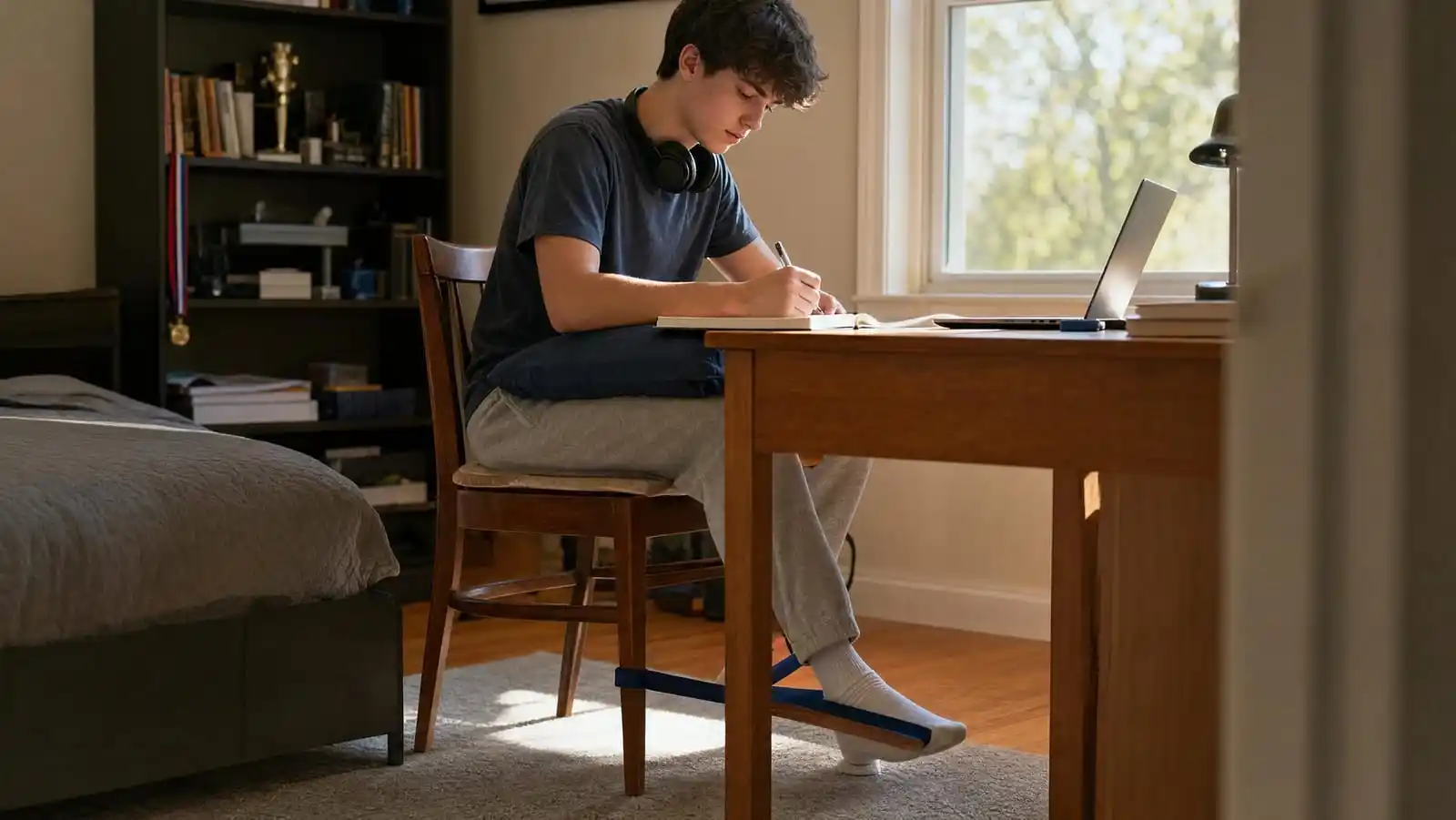
For kids with ADHD, balance boards offer something unique: they require active attention to maintain balance, which can actually improve focus on other tasks. Standing on a balance board while reading or doing homework channels restless energy into productive movement.
Our complete guide to sensory swings and vestibular toys covers the full spectrum of vestibular equipment, but balance boards deserve special attention for their versatility and therapeutic value.
We researched dozens of options and tested the most promising against criteria that matter: stability for beginners, durability for long-term use, and genuine therapeutic benefit.
The Science Behind Balance Board Benefits
The vestibular system—located in the inner ear—controls balance, spatial awareness, and coordination. It's also deeply connected to attention, arousal, and emotional regulation. When this system isn't processing input efficiently, children may struggle with focus, coordination, or managing sensory overwhelm.
Balance boards activate the vestibular system through controlled, predictable movement. Unlike sensory swings for autism that provide passive vestibular input, balance boards require active participation. Children must continuously adjust their body position, which engages both the vestibular and proprioceptive systems simultaneously.
Research has demonstrated several key benefits:
Attention regulation: Studies show a link between postural sway and attention difficulties in ADHD. By improving balance control, children often experience secondary improvements in focus and attention.
Sensory modulation: For children who are either over- or under-responsive to movement, balance boards provide controlled, self-directed input that helps calibrate the sensory system.
Motor planning: The continuous adjustments required for balancing improve motor planning skills—the ability to conceptualize, organize, and execute movement sequences.
Core strength: Maintaining balance naturally engages core stabilizing muscles, building the physical foundation for better posture and coordination.
Types of Balance Boards
Not all balance boards work the same way. Understanding the differences helps you choose the right one for your child's needs.
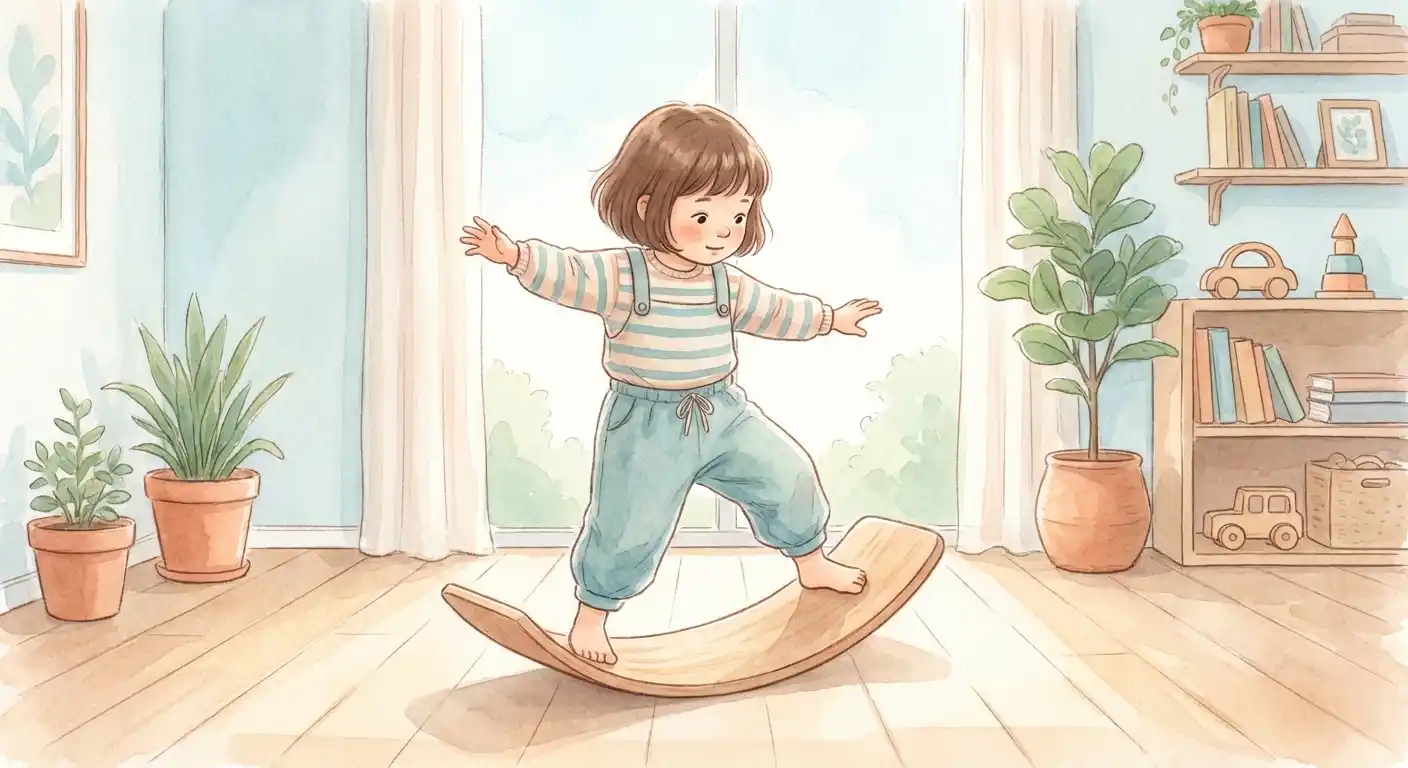
Curved Rocker Boards (like Kinderfeets): These boards have a curved bottom that allows rocking in one direction. They're versatile—children can stand, sit, rock, or use them as bridges and slides. The open-ended design encourages creative play.
Wobble Boards: These feature a spherical dome on the bottom, allowing movement in all directions. They're more challenging than rocker boards and better for children who've mastered basic balance skills.
Roller Boards (like GONGE): A cylindrical roller creates side-to-side movement. These require more control and are excellent for developing dynamic balance—the kind needed for sports and playground activities.
Seesaw Boards (like GONGE Seesaw): These provide predictable, controlled rocking motion in one plane. They're ideal for beginners or children who need a gentler introduction to balance challenges.
For children who crave rotational vestibular input, also consider spinning toys for vestibular seekers.
The 8 Best Balance Boards for Autism and ADHD
1. Kinderfeets Kinderboard — Editor's Choice
The Kinderboard earned its reputation in Waldorf early childhood classrooms, where open-ended play is paramount. This isn't just a balance board—it's a seesaw, slide, bridge, stepping stool, boat, resting nook, and whatever else your child imagines.
Key Features:
- Crafted from heavy-duty German beechwood
- 485 lb weight capacity—built for the whole family
- Dutch-designed with smooth, rounded edges
- Dimensions: 32" x 12" curved surface
Pros:
- Exceptional multi-use design sparks creative play
- Premium materials will last for years
- High weight limit means adults can model balance activities
Cons:
- Premium price point
- Large size requires storage space
Best for: Families wanting a versatile, durable board that grows with their child through multiple developmental stages.
"My son uses this for everything—balance practice, reading nook, slide for his trucks. It's the one toy that never gets boring. Worth every penny." — Verified Amazon Review
2. GONGE Seesaw Balance Board — Best for Beginners
GONGE products are found in occupational therapy clinics worldwide, and the Seesaw Balance Board shows why. Its predictable, controlled motion builds confidence in children who may be hesitant about balance challenges.
Key Features:
- Safe non-slip surface design
- Stimulates vestibular and proprioceptive senses
- Designed for ages 2+
- Integrated handles for security
Pros:
- Clinic-tested for therapeutic use
- Controlled motion reduces anxiety for sensory-sensitive kids
- Durable plastic construction handles rough use
Cons:
- Lower weight limit (110 lbs) limits adult participation
- Less versatile than curved rocker boards
Best for: Beginners, sensory-sensitive children, or families working with an OT who want proven equipment.
"Our OT recommended this specific board. My daughter was nervous at first, but the controlled rocking helped her feel safe. Now she asks for 'balance time' every morning." — Verified Amazon Review
3. GONGE Balance Roller (Weighted) — Best for Advanced
For children who've mastered basic balance boards, the weighted Balance Roller provides a progressive challenge. The sand-filled roller moves more slowly, helping younger or less experienced children develop dynamic balance skills.
Key Features:
- 5.5 lbs of sand reduces rolling speed
- Non-slip rubber tread
- Develops dynamic balance and coordination
- Suitable for ages 4+
Pros:
- Weighted design is more forgiving for learners
- Silent roll works well indoors
- Engages core muscles more intensely than rocker boards
Cons:
- Steeper learning curve than seesaw-style boards
- Lower weight limit for child use only
Best for: Children who've outgrown basic balance boards and need increased challenge, or those working on dynamic balance for sports.
"My 7-year-old with ADHD loves the challenge. It requires so much focus to stay balanced that he comes off it calmer and more regulated. His therapist was impressed." — Verified Amazon Review
4. BAIGEWA Wobble Board 33 Inch — Best Budget
The BAIGEWA proves you don't need to spend premium prices for quality vestibular equipment. With the same 485 lb capacity as boards costing twice as much, it delivers exceptional value without cutting corners.
Key Features:
- 485 lb weight capacity matches premium boards
- 33" x 11.6" curved surface
- Natural wood construction
- Smooth, splinter-free finish
Pros:
- Excellent price-to-capacity ratio
- Large enough for adult participation
- Classic curved rocker design
Cons:
- Less refined aesthetics than premium options
- Instructions could be clearer
Best for: Budget-conscious families who want quality vestibular equipment without the premium price.
"I compared this side-by-side with a board that costs three times as much. Honestly, I can't tell the difference in quality. My kids use it daily." — Verified Amazon Review
5. Goplus Wooden Balance Board 35 Inch — Best for Open-Ended Play
The Goplus emphasizes the play aspect of balance training. Its natural birch construction and curved design invite children to discover their own uses—which often means more engaged, longer-lasting play.
Key Features:
- Handcrafted from natural birch
- 35" length provides ample balance surface
- 220 lb capacity
- Indoor and outdoor suitable
Pros:
- Beautiful natural wood aesthetic
- Large size allows creative play options
- Smooth finish comfortable for bare feet
Cons:
- Mid-range weight capacity
- May need occasional wood conditioning
Best for: Families who value Montessori or Waldorf approaches to learning through open-ended play.
"Children discover how to use it—that's the magic. My daughter has made it a bridge, a slide, a rocker, and currently it's a 'surfboard.' The balance training happens naturally." — Verified Amazon Review
6. Homegician Wobble Balance Board 35 Inch — Best Montessori Style
The Homegician combines Montessori philosophy with Pikler-inspired design. It's meant to be explored, climbed, rocked, and reimagined—all while developing balance, coordination, and creative thinking.
Key Features:
- Natural wood with wave curve design
- 35" length for varied positioning
- 220 lb weight capacity
- Compatible with Pikler triangles and climbing sets
Pros:
- Integrates with existing Montessori equipment
- Encourages independent discovery
- Durable construction for climbing play
Cons:
- Requires supervision during climbing activities
- Storage space needed for full setup
Best for: Families with Montessori or Pikler equipment who want balance training that integrates with their existing setup.
"We paired this with our Pikler triangle and it's been the best investment. My son with autism spends hours creating different obstacle courses. Great for vestibular input AND creative play." — Verified Amazon Review
7. Wobble Board Kids Vestibular — Best Value
This compact wobble board focuses specifically on vestibular system stimulation. At an entry-level price point, it's an excellent way to test whether balance board training works for your child.
Key Features:
- Designed specifically for vestibular stimulation
- 35" x 11.8" surface
- 200 lb capacity
- Learning and classroom friendly
Pros:
- Affordable entry point for balance training
- Compact enough for small spaces
- Good for classroom or therapy settings
Cons:
- Less durable than premium wood options
- Lower weight capacity limits adult use
Best for: Families testing whether balance boards work for their child, or those with limited space and budget.
"Wanted to try a balance board before investing in an expensive one. This works perfectly—my son uses it every day during screen time. It helps him focus better." — Verified Amazon Review
8. Jcasbdn Toddler Balance Board — Best for Toddlers
Young children need appropriately sized equipment. The Jcasbdn is designed specifically for toddlers, with a compact size and gentle movement profile that builds confidence without overwhelming.
Key Features:
- Compact 21.7" x 9.8" size for small bodies
- Non-slip surface for safety
- 100 lb capacity
- Gentle, predictable movement
Pros:
- Sized perfectly for ages 2-4
- Non-slip surface adds security
- Affordable for testing with young children
Cons:
- Will be outgrown relatively quickly
- Lower weight limit
Best for: Toddlers and preschoolers just beginning their vestibular development journey.
"Perfect size for my 3-year-old with sensory processing challenges. The gentle movement doesn't scare her like bigger boards did. Great confidence builder." — Verified Amazon Review
Comparison Table
| Product | Best For | Weight Limit | Size | Price Range | |---------|----------|--------------|------|-------------| | Kinderfeets Kinderboard | Overall/Multi-Use | 485 lbs | 32" x 12" | $65-$85 | | GONGE Seesaw | Beginners | 110 lbs | Standard | $40-$60 | | GONGE Balance Roller | Advanced | 110 lbs | Standard | $50-$70 | | BAIGEWA Wobble Board | Budget | 485 lbs | 33" x 11.6" | $35-$50 | | Goplus Balance Board | Open-Ended Play | 220 lbs | 35" | $40-$55 | | Homegician Wobble Board | Montessori Style | 220 lbs | 35" | $45-$60 | | Wobble Board Kids | Value | 200 lbs | 35" x 11.8" | $30-$45 | | Jcasbdn Toddler Board | Toddlers | 100 lbs | 21.7" x 9.8" | $20-$30 |
How to Choose the Right Balance Board
Selecting the right balance board depends on several factors. Consider these carefully before purchasing.
Age and Skill Level
For toddlers (2-4), start with smaller boards designed for their bodies and gentle, predictable motion. The Jcasbdn or GONGE Seesaw are excellent starting points.
For school-age children (5-12), curved rocker boards like the Kinderfeets or BAIGEWA offer the right balance of challenge and accessibility. Most children can begin using these immediately with supervision.
For teens and adults, prioritize high weight capacity (400+ lbs) to ensure stability and longevity.
Weight Capacity Considerations
Always choose a board rated well above your child's current weight. Children grow, and many therapeutic activities benefit from adult participation. A 485 lb capacity board lets parents model balance activities alongside their child.
Indoor Space Requirements
Curved rocker boards need clearance around all sides—approximately 3-4 feet in each direction. Measure your space before purchasing a 35" board.
Type of Movement
- Linear rocking (curved boards): Best for beginners and calming vestibular input
- Multi-directional wobble: More challenging, better for developed balance skills
- Dynamic rolling (roller boards): Most challenging, develops sports-ready balance
Therapeutic Goals
For focus improvement: Choose boards that allow standing while doing other activities (reading, screen time, homework).
For calming/regulation: Curved rocker boards with gentle, predictable motion work best.
For coordination development: Progressive challenge from seesaw to roller boards builds skills systematically.
For detailed guidance on all vestibular equipment options, see our complete buying guide.
Balance Board Activities for Therapy
A balance board's value comes from how you use it. Here are OT-approved activities to try at home:
Basic Rocking
Start simple: stand on the board and rock gently forward and back, then side to side. Focus on keeping movement smooth and controlled. This foundational skill builds confidence and body awareness.
Standing Balance with Visual Focus
Place a visual target at eye level (a picture, stuffed animal, or window). Practice maintaining balance while keeping eyes fixed on the target. This integrates vestibular and visual systems.
Catching and Throwing
Once basic balance is mastered, add ball play. Toss a soft ball back and forth while standing on the board. This challenges balance while developing hand-eye coordination.
Homework Time Balance
For kids with ADHD, standing on a balance board during homework can improve focus. The subtle movement channels restless energy productively. Start with short periods and gradually increase duration.
Obstacle Course Integration
Include the balance board in larger obstacle courses—step onto it between other activities. This builds the ability to quickly stabilize after movement, an important real-world skill.
Reading Nook Mode
Curved rocker boards (especially Kinderfeets) can become cozy reading spots. The gentle rocking while reading provides calming vestibular input during quiet activities.
Frequently Asked Questions
What age can kids start using balance boards?
Most children can begin with age-appropriate balance boards around age 2-3, when they can stand and follow basic instructions. Start with gentle seesaw-style boards and progress to more challenging options as skills develop.
How long should balance board sessions be?
Start with 5-10 minutes and observe your child's response. Some children can use balance boards for 30+ minutes; others benefit from shorter, more frequent sessions. Watch for signs of vestibular overload (pale skin, sweating, irritability) and stop if they appear.
Can balance boards replace occupational therapy?
No. Balance boards are excellent supplemental tools that extend therapy benefits into daily life, but they don't replace professional OT services. If your child receives OT, ask their therapist which boards and activities they recommend.
Are balance boards safe for kids with autism?
Yes, when used appropriately. Many children with autism find balance boards regulating and calming. Start with predictable, controlled motion (seesaw-style) and progress based on your child's comfort. Supervision is always recommended, especially during initial use.
How do I know if my child needs a balance board?
Signs that balance boards might help include: seeking movement (jumping, spinning, crashing), difficulty sitting still, poor coordination, or challenges with focus and attention. An occupational therapy evaluation can determine whether vestibular input tools would benefit your specific child.
Final Recommendations
Balance boards offer research-backed benefits for children with autism and ADHD, combining therapeutic value with engaging, open-ended play.
For most families, the Kinderfeets Kinderboard delivers the best combination of quality, versatility, and durability.
For budget-conscious buyers, the BAIGEWA Wobble Board offers comparable performance at a significantly lower price.
For beginners and therapy settings, the GONGE Seesaw provides the clinic-tested, controlled motion that builds confidence.
Balance boards are just one piece of a comprehensive vestibular toolkit. For more floor-based vestibular activities, see our guide to scooter boards for sensory therapy. Explore our full vestibular toys guide to discover swings, spinning toys, and other equipment that supports sensory development.
As with all therapeutic equipment, balance boards work best as part of a consistent routine. Start slowly, follow your child's lead, and consult with an occupational therapist if you have questions about your child's specific needs.