This article contains affiliate links. We may earn a commission if you make a purchase through our links, at no extra cost to you.
Quick Verdict
Short on time? Here are our top spinning toys for children who crave rotary vestibular input:
Best Overall: The Dizzy Disc Original has been a therapy clinic staple for years. Portable, proven, and perfect for controlled spinning at home, school, or on the go.
Best Chair-Style: The FERUERW Spinning Chair offers a stable, floor-based alternative to ceiling swings. With a 220 lb capacity and non-slip base, it provides safe, self-directed spinning.
Best Value: The MJKCBD Sensory Spinning Chair delivers quality construction at an accessible price point—perfect for families testing whether spinning toys work for their child.
Why Some Children Crave Spinning
You know the child who spins in circles until they fall down—then gets up and spins again. That's a vestibular seeker in action.
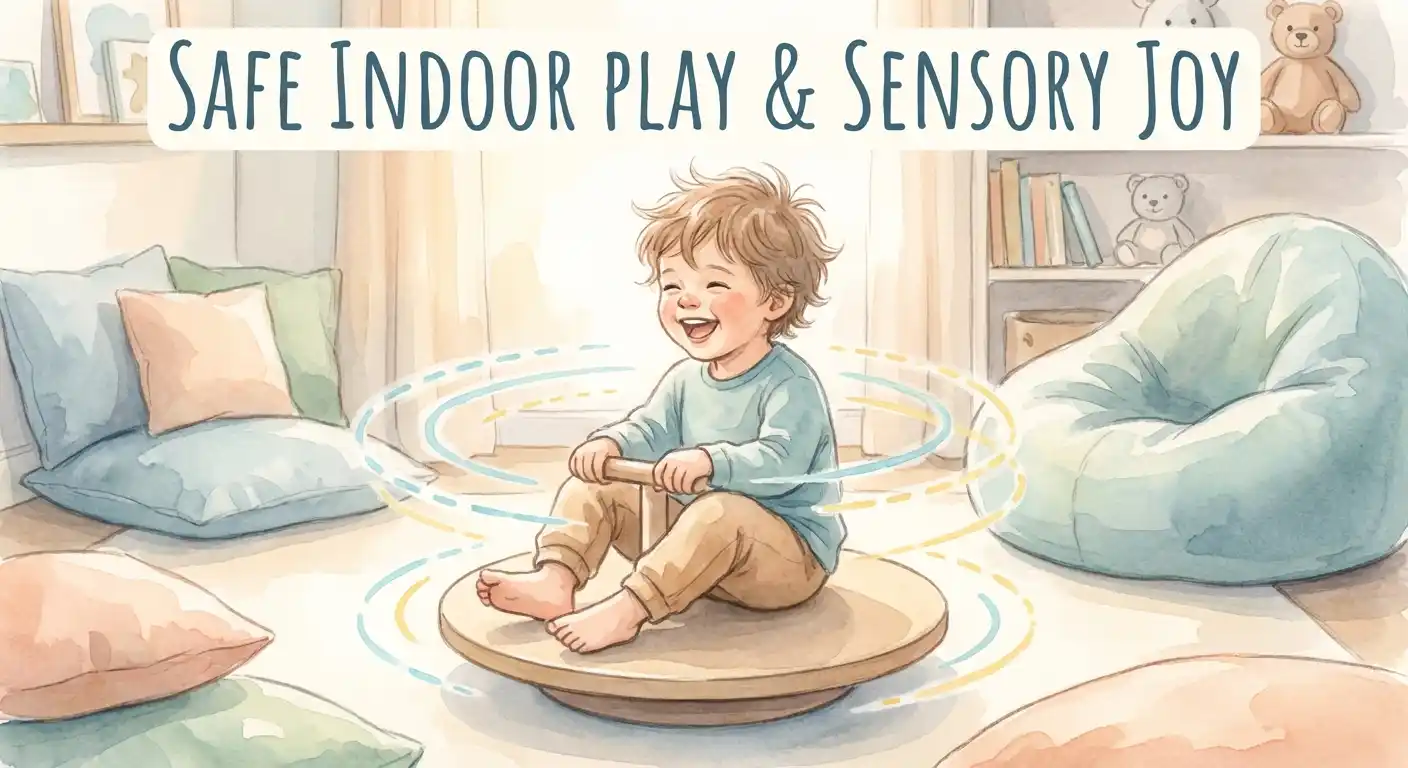
While sensory swings provide linear, back-and-forth vestibular input, spinning delivers something different: rotary vestibular stimulation. This intense, full-body sensory experience activates the vestibular system in ways that linear movement cannot.
For children with autism, ADHD, or sensory processing differences, spinning often serves a regulatory purpose. It can be calming, alerting, or organizing—depending on the child's individual sensory profile.
Our complete guide to sensory swings and vestibular toys covers the full range of vestibular equipment, but spinning toys deserve special attention. They're powerful tools that require understanding and safe use.
Spinning chairs and disc toys offer a significant advantage over ceiling-mounted options: no installation required. You can use them anywhere—living room, therapy room, classroom, or even outdoors.
We researched dozens of spinning options, prioritizing safety, durability, and genuine therapeutic value.
The Science of Rotary Vestibular Input
The vestibular system, located in the inner ear, contains two types of sensors: the semicircular canals (which detect rotation) and the otolith organs (which detect linear movement and gravity). Spinning specifically activates the semicircular canals, sending intense signals to the brain about rotational movement.
Why vestibular seekers love spinning:
Children who under-register vestibular input need more intense stimulation to "feel" movement. Spinning provides concentrated input that their sensory systems can detect and process. For many, it's deeply satisfying—like scratching an itch they can't otherwise reach.
The regulation connection:
Research on sensory integration therapy shows that controlled vestibular input can improve attention, emotional regulation, and motor planning. Spinning, when self-directed and monitored, can help children achieve the "just right" arousal state for learning and engagement.
Critical safety note:
Spinning provides intense sensory input. Too much can cause vestibular overload—a state where the system becomes overwhelmed. Watch for these warning signs:
- Pale or flushed skin
- Sweating
- Nausea or complaints of feeling sick
- Loss of balance or coordination
- Irritability or sudden mood changes
- Eye movements that don't track normally
If you see any of these signs, stop spinning immediately and allow full recovery before trying again another day.
Types of Spinning Toys
Not all spinning toys deliver the same experience. Understanding the categories helps you choose wisely.
Disc Spinners (Dizzy Disc style): Low-profile platforms where children sit and use body weight to spin. Portable and therapy-proven. Best for: controlled, self-directed spinning.
Chair-Style Spinners: Elevated seats on metal swivel bases. Higher off the ground, often with handles for stability. Best for: children who need support while spinning.
Egg/Pod Spinners: Enclosed or semi-enclosed seats that provide some containment. Best for: children who benefit from the combined input of spinning and mild compression.
Classic Sit-and-Spins: The original toy-store version. Lower weight limits, generally designed for younger children. Best for: toddlers and light recreational use.
For children who prefer linear vestibular input over rotation, consider balance boards as an alternative.
The 8 Best Spinning Toys for Vestibular Seekers
1. Dizzy Disc Original — Editor's Choice
The Dizzy Disc has been a staple in occupational therapy clinics for years, and for good reason. Its simple design delivers controlled rotary vestibular input in a portable, durable package.
Key Features:
- Lightweight, portable design with built-in handles
- Low-profile platform for stable, seated spinning
- 150 lb weight capacity
- Works at home, school, therapy, and travel
Pros:
- Therapy-proven effectiveness for vestibular stimulation
- Child controls spin speed and direction
- Compact size stores easily and travels well
Cons:
- Lower weight limit than chair-style options
- Sits on floor—some children prefer elevated seats
Best for: Families wanting a portable, therapy-grade spinning option that can move between home, school, and travel.
"Our OT recommended this exact disc. My daughter uses it every morning before school—10-15 spins each direction—and it's made a noticeable difference in her focus. Worth every penny for something this simple." — Verified Amazon Review
2. FERUERW Spinning Chair — Best Overall Chair
For families who want the benefits of a therapy swing without ceiling installation, the FERUERW delivers. Its stable metal base and comfortable seat create a safe spinning station anywhere in your home.
Key Features:
- 220 lb weight capacity with anti-slip metal base
- 360° smooth rotation via ball bearings
- Stable triangular base structure
- Designed for ages 3+
Pros:
- No ceiling mount required—use anywhere
- Sturdy base prevents tipping
- High weight capacity grows with child
Cons:
- Takes up floor space when not in use
- Heavier than disc-style options
Best for: Families wanting a stationary spinning station without installation, or those who can't mount equipment to ceilings.
"We rent and couldn't install a sensory swing. This chair gives my son the spinning he craves without any holes in the ceiling. It's sturdy—I've tested it myself—and he uses it daily." — Verified Amazon Review
3. Egg-Shaped Spinning Sensory Chair — Best for Multiple Positions
The egg shape isn't just visually appealing—it enables different body positions during spinning. Children can sit upright, recline, lie on their belly, or curl up, each providing different sensory experiences.
Key Features:
- Egg-shaped seat supports multiple positions
- 220 lb capacity with sturdy metal base
- Durable plastic construction
- Smooth 360° rotation
Pros:
- Position variety adds therapeutic value
- Comfortable for extended sessions
- Engages multiple muscle groups
Cons:
- Larger footprint than simple disc spinners
- Fixed seat position (can't adjust height)
Best for: Children who benefit from positional variety during vestibular activities, or those who like to spin while lying down.
"The egg shape is genius. My daughter spins while sitting, lying on her tummy doing 'Superman,' or curled up in a ball. Different positions seem to give her different things. More versatile than I expected." — Verified Amazon Review
4. VEVOR Kids Swivel Chair — Best Heavy Duty
When durability is your priority, VEVOR delivers commercial-grade construction. The widened metal base and industrial ball bearings handle aggressive use without degradation.
Key Features:
- Commercial-grade construction with 20.5" metal base
- 220 lb capacity with industrial ball bearings
- Triangular structure for maximum stability
- Built for intensive daily use
Pros:
- Built to withstand rough, repeated use
- Exceptionally smooth spinning action
- Wide base prevents tipping
Cons:
- Heavier than alternatives
- Higher price point reflects construction quality
Best for: Families with intensive users who will spin frequently and vigorously, or therapy settings with multiple users.
"We have three sensory-seeking kids. This chair handles all of them, multiple times a day, and still spins smoothly after six months. Commercial quality—you can feel the difference." — Verified Amazon Review
5. LWuuywa Kids Sensory Swivel Chair — Best Weight Capacity
At 250 lbs capacity, the LWuuywa accommodates older children, teens, and even adults who need vestibular input. It's the most inclusive option on our list.
Key Features:
- 250 lb maximum capacity—highest on our list
- Non-slip metal base design
- 360° vestibular system stimulation
- Suitable for kids through adults
Pros:
- Accommodates teens and adults
- Future-proof for growing children
- Stable enough for heavier users
Cons:
- Larger base footprint
- May be oversized for younger children
Best for: Families with older children, teens, or adults who need spinning input, or those wanting equipment that won't be outgrown.
"My 13-year-old with autism still craves spinning. Most 'kid' spinners have weight limits he exceeds. This one works for him—and honestly, I've used it too. Surprisingly regulating for adult anxiety." — Verified Amazon Review
6. MJKCBD Sensory Spinning Chair — Best Value
The MJKCBD proves you don't need to spend premium prices for effective vestibular equipment. It delivers the core spinning experience at an accessible price point.
Key Features:
- 220 lb capacity at budget-friendly pricing
- Metal anti-slip base
- Indoor and outdoor suitable
- Ball bearing mechanism for smooth spin
Pros:
- Excellent value for quality received
- Core features match pricier options
- Great for testing if spinning works for your child
Cons:
- Less refined aesthetics
- May not withstand as much abuse as premium options
Best for: Budget-conscious families, or those testing whether spinning toys will benefit their child before investing more.
"Wanted to try a spinning chair before spending $100+. This does everything the expensive ones do. My son loves it, uses it daily, and it's held up fine for three months." — Verified Amazon Review
7. Fish-Shaped Sensory Spinning Chair — Best Fun Design
Sometimes engagement matters as much as function. The fish shape adds play value that makes children want to use it—and consistent use is what builds sensory benefits.
Key Features:
- Playful fish design increases engagement
- 220 lb capacity with durable metal base
- Non-slip base for safety
- Promotes balance and body awareness
Pros:
- Fun design encourages consistent use
- Conversation starter for therapy or play
- Same core functionality as standard designs
Cons:
- Design may not appeal to older children
- Slightly less versatile positioning than egg shape
Best for: Younger children, or any child who's more likely to use equipment that looks fun and inviting.
"My 5-year-old calls it her 'fishy chair.' She actually asks to spin now—never happened with boring-looking equipment. Sometimes making it fun is what gets the sensory input happening." — Verified Amazon Review
8. Zhenx Spinning Chair (Ages 3-18) — Best for Teens
Designed explicitly for the full childhood and teen range, the Zhenx offers mature styling that older kids don't find embarrassing, plus the durability for larger bodies.
Key Features:
- Designed for ages 3-18
- 220 lb weight capacity
- 21" x 19" seat dimensions
- Trains grip strength and core coordination
Pros:
- Age-appropriate styling for older users
- Sized for larger bodies
- Focuses on coordination development
Cons:
- May be too large for very young children
- Standard weight capacity (not the highest)
Best for: Pre-teens and teenagers who need vestibular input but have outgrown child-focused designs.
"Finally something my 14-year-old will actually use. Most sensory equipment looks babyish to him. This looks more like fitness equipment. He spins before homework—helps him focus better." — Verified Amazon Review
Comparison Table
| Product | Best For | Weight Limit | Style | Price Range | |---------|----------|--------------|-------|-------------| | Dizzy Disc Original | Portable/Travel | 150 lbs | Disc | $45-$60 | | FERUERW Spinning Chair | Overall Chair | 220 lbs | Chair | $55-$75 | | Egg-Shaped Chair | Multiple Positions | 220 lbs | Egg | $50-$70 | | VEVOR Swivel Chair | Heavy Duty | 220 lbs | Chair | $60-$80 | | LWuuywa Swivel Chair | Highest Capacity | 250 lbs | Chair | $55-$75 | | MJKCBD Spinning Chair | Value | 220 lbs | Chair | $45-$65 | | Fish-Shaped Chair | Fun Design | 220 lbs | Chair | $50-$70 | | Zhenx Chair | Teens | 220 lbs | Chair | $55-$75 |
How to Choose the Right Spinning Toy
Selecting the right spinning toy depends on several factors. Consider these carefully before purchasing.
Age and Size
For younger children (3-6), the Dizzy Disc or Fish-Shaped Chair offer appropriate sizing and engaging designs. For older children and teens, prioritize higher weight capacities and mature styling.
Weight Capacity
Choose a capacity well above your child's current weight. Children grow, and spinning creates dynamic forces beyond static body weight. The 220-250 lb options accommodate growth and more vigorous use.
Portability Needs
If you need equipment that travels—to therapy, school, grandparents' houses—the Dizzy Disc's compact design wins. For a permanent home station, chair-style options offer more features.
Indoor/Outdoor Use
Most spinning chairs work indoors on hard floors. For outdoor use, verify the specific product supports it—UV exposure and weather can degrade some materials.
Intensity Level
Different products spin at different speeds based on their bearing systems. Smoother bearings = faster potential spinning. For children who need gentler input, products with more friction may be preferable.
For detailed guidance on all vestibular equipment considerations, see our complete buying guide.
Safe Spinning: Essential Guidelines for Parents
Spinning provides intense vestibular input. Safe use requires understanding and monitoring. Follow these guidelines:
Start Slow
Begin with just 5-10 spins in each direction, then allow the child to rest. Observe their response before increasing. Some children can handle extended spinning; others need very limited doses.
Let the Child Control
Self-directed spinning is generally safer than adult-pushed spinning. When children control their own speed and duration, they're more likely to stop before overload occurs. Their nervous system provides real-time feedback that adults can't sense for them.
Watch for Overload Signs
Stop immediately if you observe:
- Pale or unusually flushed skin
- Sweating unrelated to temperature
- Nausea or verbal complaints of feeling sick
- Unusual eye movements (nystagmus that doesn't resolve)
- Sudden mood changes or irritability
- Loss of balance or coordination
Allow Recovery Time
After a spinning session, allow 15-30 minutes before the next intense vestibular activity. The vestibular system needs time to recalibrate.
Know When to Stop
If overload signs appear, skip spinning that day entirely. Vestibular overload can cause discomfort that lasts hours. It's always better to do less than too much.
Frequently Asked Questions
Why does my child want to spin constantly?
Constant spinning-seeking is a vestibular seeking behavior. It indicates your child's nervous system needs more vestibular input than typical daily activities provide. This is common in children with autism, ADHD, and sensory processing differences. Controlled spinning through appropriate equipment can help meet this need safely.
Is spinning safe for kids with autism?
Yes, when done appropriately. Many children with autism benefit from the intense vestibular input that spinning provides. However, individual responses vary—some children are highly sensitive to vestibular input. Start slowly, monitor carefully, and consult with an occupational therapist if you have concerns.
How long should spinning sessions be?
This varies dramatically by child. Some can spin for 10+ minutes without issue; others show overload signs after 30 seconds. Start with very short sessions (5-10 spins each direction) and gradually increase based on your child's response. Let your child guide the duration when possible.
Can spinning make my child dizzy sick?
Yes, excessive spinning can cause vestibular overload, which may include nausea, dizziness, and discomfort. This is why monitoring and gradual introduction are essential. If your child experiences these symptoms, reduce session intensity and duration. The goal is regulated, beneficial input—not overwhelming the system.
Why is self-directed spinning better than being pushed?
When children control their own spinning, they receive real-time feedback from their nervous system and naturally adjust or stop when approaching overload. When an adult pushes, this self-regulation mechanism is bypassed, increasing the risk of vestibular overload.
Final Recommendations
Spinning toys provide powerful vestibular input that many sensory-seeking children need. Used safely and appropriately, they can be valuable regulation tools.
For most families, the Dizzy Disc Original offers proven, portable, therapy-grade spinning in a simple package.
For stationary use at home, the FERUERW Spinning Chair delivers stability and durability without installation.
For budget-conscious families, the MJKCBD Sensory Spinning Chair provides core functionality at an accessible price.
Spinning is just one type of vestibular input. For linear vestibular movement, try scooter boards. For a complete picture of vestibular equipment—including swings, balance boards, and scooter boards—explore our full vestibular toys guide.
Remember: start slow, let your child lead, and watch for overload signs. With appropriate use, spinning toys can channel sensory-seeking behavior into regulated, beneficial input.