This article contains affiliate links. We may earn a commission if you make a purchase through our links, at no extra cost to you.
Quick Verdict: Pod Swing or Hammock Swing?
Choose a Pod Swing if your child seeks enclosed spaces, gets overstimulated by visual input, or loves spinning. Pod swings create a private retreat that blocks out the world. Our top pick: Harkla Sensory Pod Swing ($79).
Choose a Hammock Swing if your child craves deep pressure, likes being wrapped or swaddled, and wants to see their surroundings while swinging. Hammock swings deliver full-body compression like a hug. Our top pick: Harkla Sensory Swing ($99).
Both swing types provide calming vestibular input—the difference is how they calm. Neither is universally "better." The right choice depends on your child's unique sensory profile.
Two Swing Styles, Two Therapeutic Approaches
Parents shopping for sensory swings quickly discover there are two main styles: enclosed pod swings that look like hanging cocoons, and open hammock swings made from stretchy fabric that wraps around the body. Both help children with autism, ADHD, and sensory processing challenges regulate their nervous systems—but they accomplish this through different mechanisms.
The question "which one calms my child better?" doesn't have a one-size-fits-all answer. Instead, it depends on your child's specific sensory needs and preferences. Does your child seek out small enclosed spaces, or prefer being wrapped in blankets? Does visual stimulation overwhelm them, or do they want to see everything happening around them?
This guide will help you understand the therapeutic differences between pod swings and hammock swings, identify which style matches your child's sensory profile, and choose the right product for your family. For a broader overview of vestibular equipment, see our complete guide to sensory swings and vestibular toys.
Understanding the Difference
What is a Pod Swing?
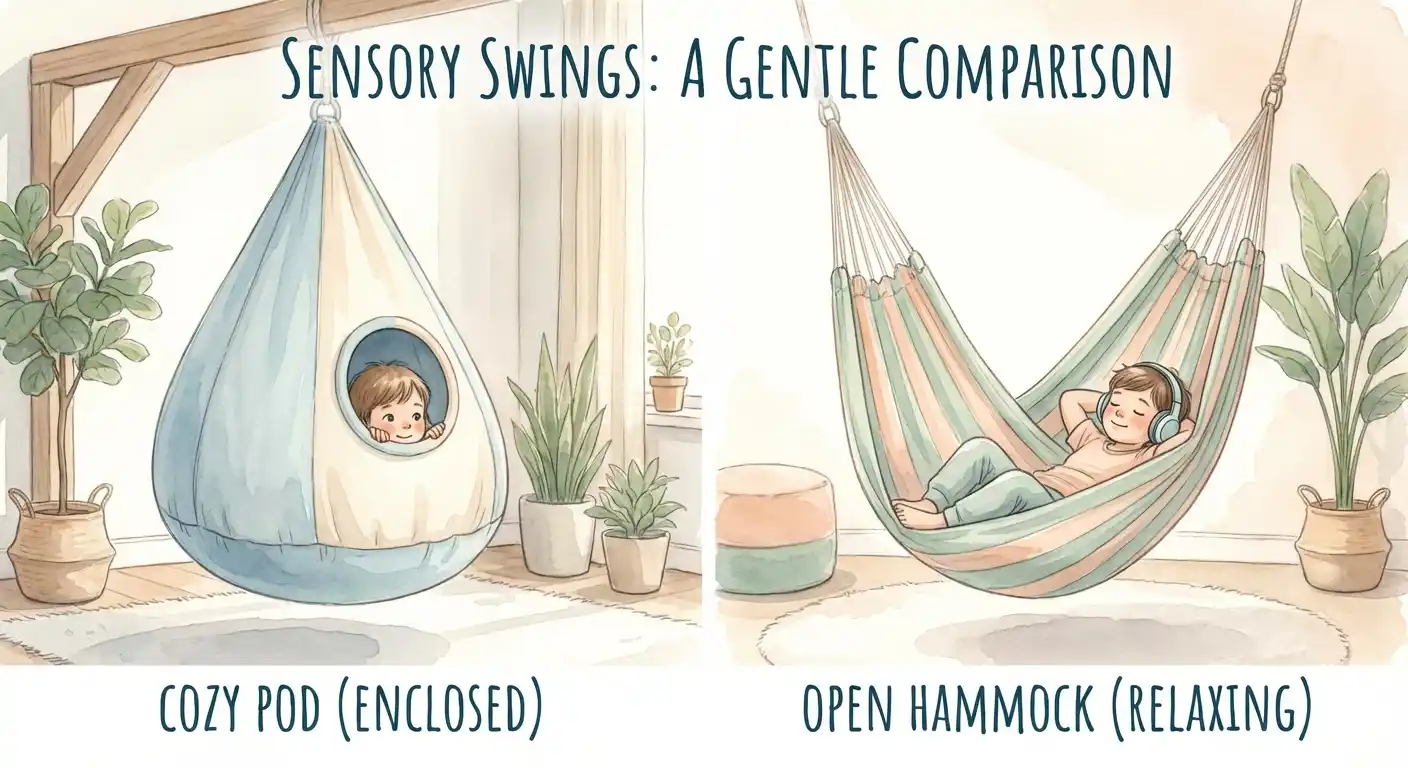
A pod swing is an enclosed, teardrop-shaped hanging seat that creates a cocoon-like space. The child sits inside with fabric walls surrounding them on all sides, like a hanging nest or egg. Many pod swings include an inflatable cushion seat that adds comfort and helps children work on core strength and balance while sitting.
The defining feature of pod swings is their ability to block visual stimuli. With fabric on all sides, children can retreat into a private space where the outside world fades away. This makes pod swings excellent for spinning—children can rotate freely without getting distracted or disoriented by a changing visual field.
Pod swings work best for: Spinning and rotational vestibular input, gentle swaying, creating a retreat space, blocking visual overwhelm, reading nooks, and quiet time.
What is a Hammock Swing?
A hammock swing (also called a compression swing or cuddle swing) is made from stretchy fabric that the child wraps around their body. Unlike pod swings, hammock swings are open—the child can see their surroundings while the elastic fabric provides compression and deep pressure input around their body.
The stretchy material hugs the child like a full-body squeeze, providing proprioceptive input that many children with sensory needs crave. When gathered and bunched, the fabric creates a cocoon-like wrap, while spread out it allows for various swinging positions.
Hammock swings work best for: Deep pressure and compression, linear back-and-forth swinging, full-body proprioceptive input, versatile positioning (lying, sitting, wrapped), and shared use by multiple children.
Sensory Benefits Compared
Both swing types deliver vestibular input through movement, but they differ in other sensory benefits:
| Sensory Benefit | Pod Swing | Hammock Swing | |-----------------|-----------|---------------| | Visual Blocking | Excellent | None (open design) | | Deep Pressure | Moderate | Excellent | | Vestibular Input | Excellent (especially spinning) | Excellent (linear) | | Enclosed Feeling | Yes (fully enclosed) | Partial (when wrapped) | | Body Awareness | Good | Excellent | | Spinning Capability | Great | Limited | | Position Versatility | Limited to sitting | Multiple positions |
An important distinction from occupational therapists: Slow, predictable, linear movement—like back-and-forth swinging—tends to be calming. Rotary or spinning movement is more alerting and activating. Pod swings naturally encourage spinning, while hammock swings encourage linear swaying. Consider which type of vestibular input your child needs: calming regulation or alerting stimulation.
When to Choose a Pod Swing
A pod swing may be the better choice if you observe these behaviors in your child:
Your child seeks enclosed spaces. Does your child squeeze into closets, build blanket forts, hide under furniture, or curl up in tight corners? Children who naturally seek enclosed spaces often find deep comfort in pod swings. The surrounding fabric creates the same secure, contained feeling they're already seeking.
Your child is easily overstimulated by visual input. Some children become overwhelmed when there's too much to look at—busy patterns, movement in their peripheral vision, or crowded environments. Pod swings block out visual distractions, allowing children to focus inward and regulate without competing stimuli.
Your child loves spinning. If your child seeks rotational movement—spinning in circles, twirling, or riding merry-go-rounds repeatedly—a pod swing lets them safely spin while the enclosed fabric prevents visual disorientation.
Your child needs a retreat space. For children who need a designated "safe space" to recover from sensory overload, a pod swing can serve as a calming corner or escape pod where they can reset.
Pod swings work especially well as reading nooks, homework stations for children who need sensory input while focusing, or dedicated calming corners in bedrooms or playrooms.
When to Choose a Hammock Swing
A hammock swing may be the better choice if you observe these behaviors in your child:
Your child seeks deep pressure and compression. Does your child ask for tight hugs, love being wrapped in blankets, sleep under heavy covers, or squeeze between couch cushions? These are signs they crave proprioceptive input. Hammock swings wrap around the body like a full-length hug, providing the compression they need.
Your child wants to see their surroundings. Some children feel anxious when they can't monitor their environment. If your child needs to see what's happening around them—even while swinging—a hammock swing's open design allows this while still providing sensory input.
Your child enjoys being wrapped or swaddled. Children who loved swaddling as infants often continue to find comfort in wrapped, contained feelings. Hammock swings can be bunched and gathered to create a swaddling sensation that pod swings can't replicate.
Multiple children will share the swing. Hammock swings typically have higher weight capacities and their versatile design accommodates different body sizes and positions more easily than pod swings.
Hammock swings work well in family rooms, shared spaces, or anywhere the swing will be used by multiple children. They're also ideal for children who need daily sensory diet activities but don't require visual blocking.
Top Pod Swings
Harkla Sensory Pod Swing — Best Premium Pod
The Harkla Sensory Pod Swing delivers the enclosed cocoon experience with premium quality and Harkla's lifetime warranty.
Key Features:
- 150 lb weight capacity
- Soft nylon fabric construction
- Rock climbing-rated hardware included
- Lifetime warranty from US-based company
Pros:
- Premium materials and construction
- Creates fully enclosed sensory retreat
- All mounting hardware included
- Responsive customer support
Cons:
- Lower weight capacity than hammock alternatives
- Premium price point
- Pod design limits movement types
Best For: Families wanting a premium enclosed experience that will last for years.
Appomattox Kids Hanging Pod Swing — Best Budget Pod
The Appomattox Kids Hanging Pod Swing includes a clever pocket for books and toys, making it perfect as a reading nook.
Key Features:
- 170 lb weight capacity
- Built-in storage pocket
- Cotton/polyester blend fabric
- Multiple color options
Pros:
- Includes pocket for books, tablets, or stuffed animals
- Good weight capacity for a pod swing
- Budget-friendly price
- Cozy nest-like feeling
Cons:
- Standard warranty (not lifetime)
- May not be as durable as premium options
Best For: Creating a reading nook or relaxation station where kids can bring comfort items.
OUTREE Kids Pod Swing — Entry-Level Pod
The OUTREE Kids Pod Swing offers an affordable entry point for families testing whether pod swings work for their child.
Key Features:
- 100 lb weight capacity
- Lightweight (2.2 lbs)
- Easy installation
- Multiple color options
Pros:
- Most affordable pod swing option
- Extremely lightweight and portable
- Simple setup
- Over 6,000 positive reviews
Cons:
- Lower weight capacity limits longevity
- Best for younger/smaller children only
Best For: Young children or families testing pod swing preference before investing more.
For more options, see our best pod swings roundup.
Top Hammock/Compression Swings
Harkla Sensory Swing — Best Premium Hammock
The Harkla Sensory Swing is the gold standard for compression swings, featuring double-layer fabric and a lifetime warranty.
Key Features:
- 300 lb weight capacity
- Double-layer spandex-nylon blend
- All hardware included ($50 value)
- Lifetime warranty
Pros:
- Highest weight capacity accommodates growth
- Premium fabric provides excellent compression
- US-based company with responsive support
- Free product course included
Cons:
- Premium price ($99)
- May be more than young children need
Best For: Families committed to long-term use who want equipment that lasts through childhood.
Friendly Cuddle Sensory Swing — Best Value Hammock
The Friendly Cuddle Sensory Swing was designed by parents for their sensory-seeking son and offers CPSC-tested safety at a mid-range price.
Key Features:
- 300 lb weight capacity
- 55" x 61" dimensions
- CPSC safety tested
- Double-layer fabric
Pros:
- Designed by parents who understand sensory needs
- CPSC tested for peace of mind
- High weight capacity matches premium brands
- Stylish design options
Cons:
- Standard warranty (not lifetime)
- Newer brand with less track record
Best For: Families wanting premium features (high capacity, safety testing) without premium pricing.
Aokitec Sensory Swing — Best Budget Hammock
The Aokitec Sensory Swing proves you don't need to spend $100 for effective sensory therapy equipment.
Key Features:
- 220 lb weight capacity
- 59" x 67" dimensions
- Soft nylon fabric
- Hardware included
Pros:
- Excellent price-to-quality ratio
- Strong weight capacity for a budget swing
- Thousands of positive reviews
- Known for responsive customer service
Cons:
- Single-layer fabric (not double)
- Standard warranty
Best For: Budget-conscious families or first-time buyers testing hammock swing preference.
For help choosing between price points, see our premium vs budget comparison.
Full Comparison Table
| Feature | Harkla Pod | Appomattox Pod | OUTREE Pod | Harkla Hammock | Friendly Cuddle | Aokitec | |---------|------------|----------------|------------|----------------|-----------------|---------| | Type | Enclosed | Enclosed | Enclosed | Compression | Compression | Compression | | Price | $79 | $40-50 | $35-45 | $99 | $50-60 | $35-45 | | Weight Capacity | 150 lbs | 170 lbs | 100 lbs | 300 lbs | 300 lbs | 220 lbs | | Visual Blocking | Yes | Yes | Yes | No | No | No | | Deep Pressure | Moderate | Moderate | Moderate | Excellent | Excellent | Good | | Warranty | Lifetime | Standard | Standard | Lifetime | Standard | Standard | | Best For | Premium retreat | Reading nook | Young kids | Long-term use | Value seeker | Budget |
Can't Decide? Here's How to Choose
If you're still unsure, try these approaches:
Observe your child's natural behaviors. Does your child hide in small spaces like closets and blanket forts? That points toward a pod swing. Does your child seek tight hugs, squeeze between cushions, or love being wrapped in blankets? That points toward a hammock swing.
Consider the primary use. If you want a dedicated calming space that blocks the world out, choose a pod. If you want a versatile swing for daily sensory input that the whole family can use, choose a hammock.
Start budget, then upgrade. If budget allows, consider starting with a lower-cost option ($35-45) to confirm your child's preference. Once you know they love it, you can invest in a premium version with better durability and warranty.
Know that hammock swings can adapt. When gathered and bunched, hammock swings can create a semi-enclosed cocoon feeling—not as complete as a pod, but a compromise that offers some benefits of both styles.
Frequently Asked Questions
Can my child spin in a hammock swing?
Limited spinning is possible with a hammock swing if you install a 360° swivel hanger, but the open design makes extended spinning more disorienting than a pod swing. If spinning is your child's primary goal, a pod swing is the better choice. For mounting details including swivel installation, see our sensory swing installation guide.
Are pod swings safe?
Yes, pod swings from reputable brands are safe when installed properly and used as directed. Look for weight capacity ratings that exceed your child's weight, and always supervise young children. The enclosed design actually adds stability since children are less likely to fall out.
Which swing is better for sleeping or napping?
Neither swing type is designed for unsupervised sleeping. However, if your child tends to rest in the swing, hammock swings allow more natural reclining positions while pod swings require sitting upright. Always supervise rest time in any swing.
Can I use both types?
Absolutely. Many families find that having both options serves different needs—a hammock swing in the main living area for daily sensory input, and a pod swing in the child's bedroom as a retreat space. If budget allows, using both types gives your child the most versatile sensory support.
Conclusion: Match the Swing to Your Child
Both pod swings and hammock swings effectively calm children with sensory processing needs—they simply work through different mechanisms.
Pod swings deliver calming through visual blocking, enclosed security, and rotational vestibular input. They're ideal for children who seek small spaces, need retreat from sensory overload, or love spinning.
Hammock swings deliver calming through deep pressure compression, full-body proprioceptive input, and linear vestibular movement. They're ideal for children who crave hugs and squeezes, want to see their surroundings, or need a versatile swing for the whole family.
Our top picks:
- Best Pod Swing: Harkla Sensory Pod Swing — Premium enclosed experience with lifetime warranty
- Best Hammock Swing: Harkla Sensory Swing — Premium compression with 300 lb capacity
- Best Budget Option: Aokitec Sensory Swing — Proven quality at an accessible price
Whichever style you choose, you're giving your child a powerful tool for sensory regulation. For more swing options and equipment recommendations, explore our best sensory swings for autism roundup or browse our full sensory swing guide.