This article contains affiliate links. We may earn a commission if you make a purchase through our links, at no extra cost to you.
Key Takeaways
- Proprioception is the body-awareness sense—receptors in your muscles, tendons, and joints constantly tell your brain where your body is and how much force it is using.
- Heavy work means pushing, pulling, lifting, carrying, and hanging; occupational therapists use it to deliver strong proprioceptive input that many children find organizing.
- Deep pressure—firm, whole-body squeezing—may help shift the nervous system toward a calmer "rest and digest" state, which is why it feels soothing to so many kids.
- Proprioceptive input works for both seekers and avoiders, and unlike some sensory input, it rarely overstimulates, making it a reliable regulation tool across the day.
- Individual fit and professional guidance matter; introduce weighted tools with input from an occupational therapist and never force a child to use them.
Proprioception is your body's sense of where it is in space—the muscle-and-joint feedback that lets you climb stairs without watching your feet. Heavy work is the everyday pushing, pulling, and carrying that feeds this sense. For children with autism, ADHD, and sensory processing disorder (SPD), proprioceptive and heavy work sensory tools can be genuinely organizing, focusing, and calming.
If your child crashes into the couch, chews on shirt collars, hangs off furniture, or squeezes into tight spaces, they may be seeking exactly this kind of input. These behaviors are not misbehavior—they are the nervous system asking for feedback it needs. Sensory differences are so common in autism that they are now part of the diagnostic criteria, with research estimating that a large majority of autistic children experience some form of atypical sensory processing (NIH-indexed research review).
This guide is the hub for our proprioceptive series. It explains what proprioception is, how heavy work fits into daily life, how needs change with age, and how tools like weighted vests and body socks are typically used. Whether you are a parent building a home toolkit, a teacher creating a calmer classroom, or a caregiver supporting a teen, you will find plain-language, research-informed guidance here.
Table of Contents
- What Is Proprioception? The Body's Hidden Sense
- Heavy Work: The Foundation of Proprioceptive Input
- Proprioceptive Activities by Age
- Proprioceptive Input at School
- Proprioception vs. the Other Movement Senses
- Deep Pressure: Proprioception's Calming Cousin
- Using Proprioceptive Input for Calm and Regulation
- Proprioceptive Input for Teens and Adults
- Weighted and Compression Vests
- Body Socks and Sensory Sacks
- Frequently Asked Questions
- Conclusion
What Is Proprioception? The Body's Hidden Sense
Proprioception is the sense that tells your brain where your body parts are and how much effort your muscles are using—without you having to look. It is why you can touch your nose with your eyes closed, judge how hard to grip a paper cup, or walk down stairs in the dark. It runs quietly in the background of every movement you make.
This sense relies on specialized receptors called proprioceptors, which sit inside your muscles, tendons, ligaments, and joint capsules. When you move, stretch, or bear weight, these receptors send a continuous stream of feedback to the brain about position and force (NAPA Center). It is sometimes called the body's "hidden" or "sixth" sense precisely because we rarely notice it working.
For a child whose proprioceptive system is under-registering that feedback, the world can feel unpredictable. They may push too hard, bump into things, sit slumped, break pencil tips, or seek out crashing and squeezing to "find" their body. Understanding what proprioception is in autism and ADHD helps explain why these children often calm down after a burst of physical, muscle-heavy play. Proprioceptive and heavy work sensory tools are simply structured ways to deliver that feedback on purpose.
Signs a Child May Be Seeking Proprioceptive Input
- Crashing into furniture, walls, or people
- Chewing on clothing, pencils, or non-food objects
- Hugging tightly, squeezing, or wedging into small spaces
- Stomping, jumping, or "heavy-footed" walking
- Craving rough-and-tumble play
These signs are clues, not diagnoses. An occupational therapist (OT) can help you understand your child's individual sensory profile and what kind of input best supports them.
Heavy Work: The Foundation of Proprioceptive Input
If proprioception is the sense, heavy work is how you feed it. Heavy work refers to any activity that pushes, pulls, lifts, carries, or otherwise makes muscles and joints work against resistance. Occupational therapists often build heavy work into a child's "sensory diet"—a personalized set of sensory strategies spread across the day—because this input is one of the most reliable ways to help a child feel organized and regulated (Understood.org).
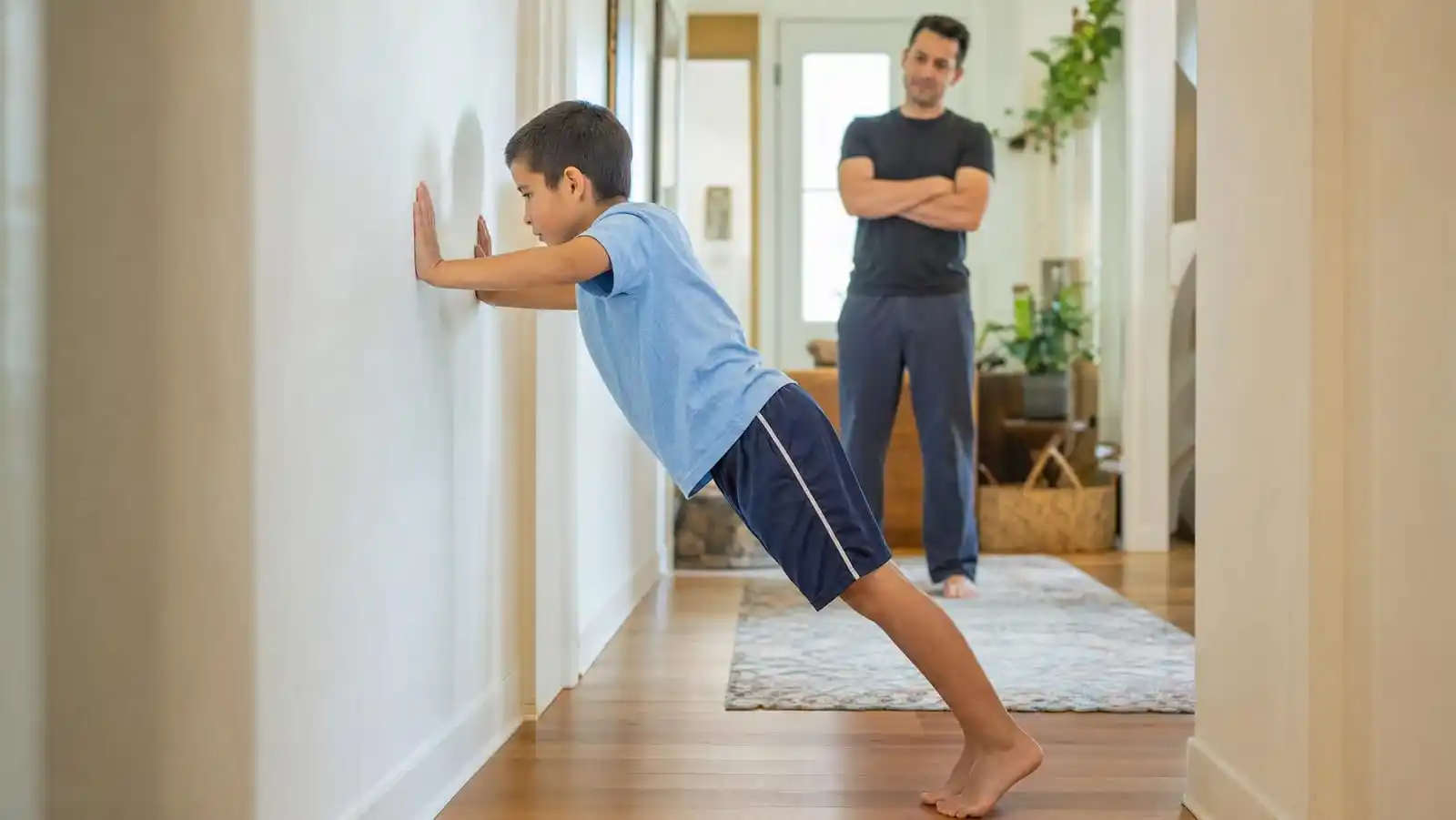
The appeal of heavy work is that it is practical and free. You do not need special equipment to start—there are many heavy work activities you can do at home using furniture, laundry, groceries, and body weight. Carrying a stack of books, pushing a laundry basket, helping vacuum, or doing wall push-ups all count.
Everyday Heavy Work Ideas
- Pushing and pulling: vacuuming, pushing a loaded cart, tug-of-war, moving chairs
- Carrying: groceries, water jugs, a weighted backpack for a short walk
- Lifting and dumping: filling and emptying a basket of toys or books
- Whole-body: wall push-ups, crawling, animal walks, hanging from a bar
- Household "chores": wiping tables, kneading dough, gardening
Make Heavy Work a Job, Not a Punishment
Kids respond best when heavy work feels purposeful. Frame it as "being a big helper"—"Can you deliver these heavy books to the shelf?"—rather than a task. A win-win: the input helps their body while the chore actually gets done.
A common rhythm is a few minutes of heavy work before a demanding transition—before homework, before circle time, or before a car ride. Many families find the calming effect lasts well beyond the activity itself.
Proprioceptive Activities by Age
The need for proprioceptive input shows up at every age, but the activities should match a child's size, strength, and interests. What organizes a toddler will bore a ten-year-old, and what challenges a teen could overwhelm a preschooler.
For the youngest kids, proprioceptive activities for toddlers and preschoolers are usually playful and adult-supported: crawling through tunnels, "squish" games under couch cushions, carrying a small basket of toys, bear hugs, and climbing on safe playground equipment. These build body awareness while feeling like ordinary play.
A Quick Age-by-Age Snapshot
| Age Range | Sample Heavy Work / Proprioceptive Play | |-----------|------------------------------------------| | Toddlers (0–2) | Bear hugs, gentle squishes, crawling, pushing push-toys | | Preschool (3–5) | Animal walks, tunnel crawls, carrying light "jobs," playdough | | School age (6–8) | Wall push-ups, tug-of-war, weighted backpack helper trips, monkey bars | | Tween (9–12) | Resistance-band play, yoga, carrying groceries, wheelbarrow walks | | Teen (13+) | Weight training, hiking, rock climbing, chores with real resistance |
Older kids can take on more resistance and more independence—resistance bands, yoga, carrying real groceries, or climbing. The key across all ages is that the child stays in control of the intensity and can stop when they want to. Proprioceptive input is meant to feel good and grounding, never like a struggle.
Proprioceptive Input at School
The classroom asks children to sit still, focus, and self-regulate for hours—exactly the conditions that can leave a proprioceptive seeker restless, fidgety, or dysregulated. Building proprioceptive input in the classroom gives these students a socially acceptable, non-disruptive way to get the feedback their bodies crave so they can attend to learning.
Teachers and school OTs often weave small doses of heavy work into the day. Because proprioceptive input rarely overstimulates, it can usually be offered without derailing a lesson.
Classroom-Friendly Strategies
- Movement jobs: stacking chairs, carrying books to the office, wiping the whiteboard, handing out materials
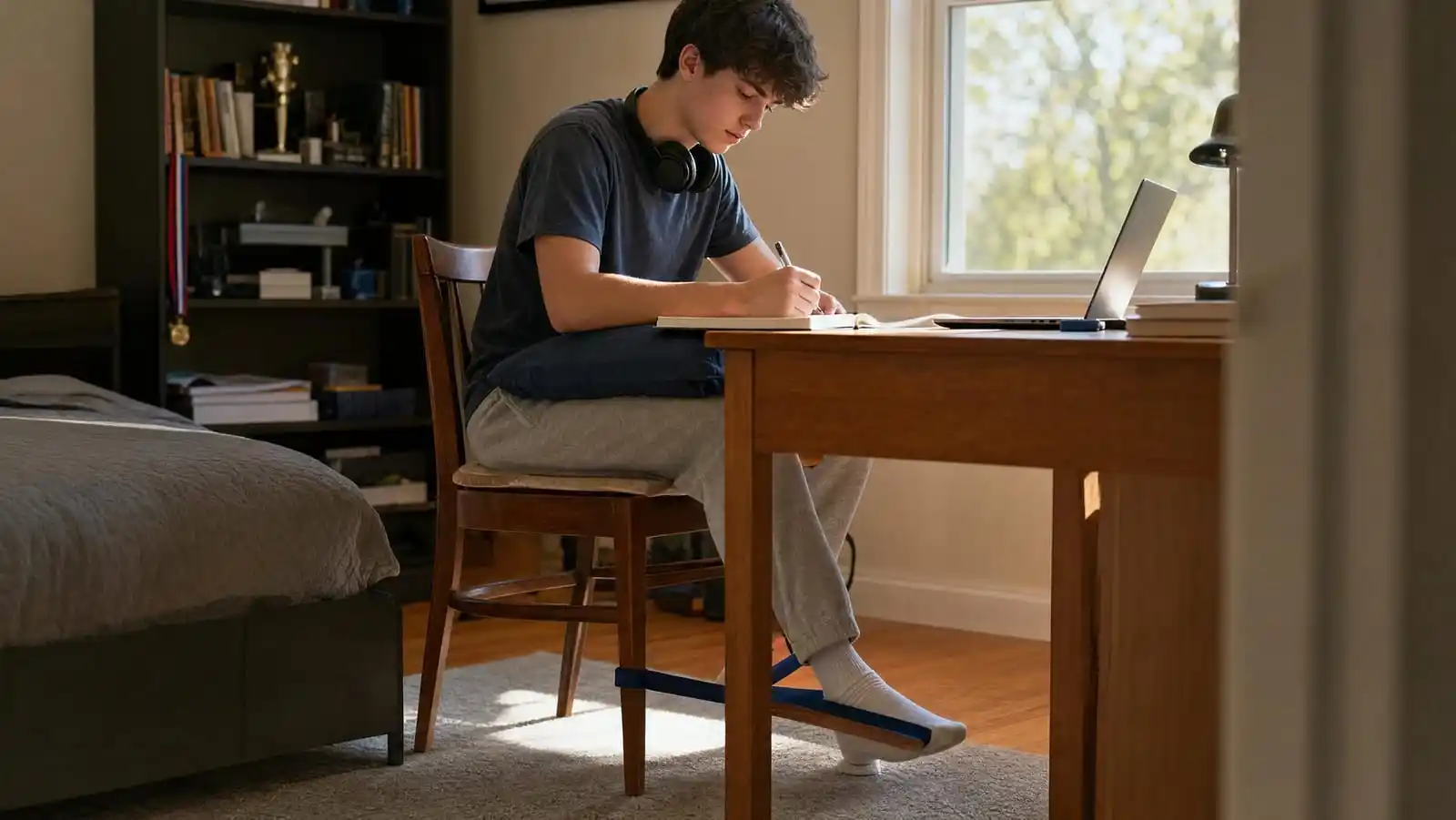
- Seat options: chair push-ups, pushing palms together, a resistance band tied across chair legs to "bounce" feet against
- Brain breaks: wall push-ups, animal walks, or a quick stretch between subjects
- Tools: a weighted lap pad during seatwork or a chewable pencil topper for kids who mouth objects
Sensory strategies at school work best when they are planned, not improvised in a crisis. A student's IEP or 504 plan is a natural place to document supports, ideally designed with the school occupational therapist so they fit the child and the classroom routine.
Proprioception vs. the Other Movement Senses
Proprioception is often confused with the vestibular sense, and while both are "hidden" senses tied to movement, they do different jobs. Knowing how proprioceptive and vestibular input differ helps you choose the right tool for the moment.
Proprioception comes from receptors in the muscles and joints; it tells the brain about body position and force. The vestibular sense comes from the inner ear; it tells the brain about head position, balance, and movement through space—spinning, swinging, tilting, and speeding up or slowing down.
How They Compare
| | Proprioception | Vestibular | |---|---|---| | Where it lives | Muscles, tendons, joints | Inner ear | | What it senses | Body position, force, effort | Balance, head movement, speed | | Typical effect | Usually calming and organizing | Can be alerting or calming | | Example input | Pushing, carrying, squeezing | Swinging, spinning, rocking |
A practical difference: proprioceptive input is generally a safe bet for calming, while vestibular input (like fast spinning) can be either soothing or highly stimulating depending on the child and the direction of movement. That is why many OTs pair the two—for instance, using a swing (vestibular) combined with pushing off a wall (proprioceptive). If your child loves motion, our guide to vestibular and movement toys explores swings and spinners in depth.
Proprioception also works closely with the tactile (touch) system. Deep-pressure activities deliver both muscle-joint feedback and firm touch, which is part of why they feel so grounding; you can read more in our guide to tactile input.
Deep Pressure: Proprioception's Calming Cousin
Deep pressure—also called deep touch pressure or deep pressure stimulation—is firm, distributed pressure applied to large areas of the body, like a big bear hug, a firm massage, or the snug weight of a blanket. It overlaps heavily with proprioception because squeezing and compression stimulate the same muscle-and-joint receptors while adding a wave of soothing touch.
Why does it calm? Researchers describe deep pressure as modulating the autonomic nervous system to produce a calming effect—nudging the body away from "fight or flight" and toward the parasympathetic "rest and digest" state. One study measuring heart rate and skin conductance found that deep pressure decreased the physiological arousal of children with autism during a stressful situation (NIH / PMC study).
Ways to Offer Deep Pressure
- Weighted items: lap pads and blankets sized to the child
- Compression: snug clothing, compression vests, or a body sock
- Hands-on: firm (never painful) squeezes, "sandwich" games with cushions, bear hugs
- Self-directed: wrapping up burrito-style in a blanket, wall push-ups
Practicing deep pressure therapy at home can be as simple as a firm hug or a snug blanket during a wind-down routine. Because weight and compression feel calming to so many children, deep pressure is a cornerstone of bedtime sensory routines—our guide to weighted blankets for sleep covers how to size and choose one safely, and our broader sleep and bedtime sensory solutions guide puts it in the context of a full wind-down plan.
Safety First With Weight and Compression
Weighted and compression tools should be introduced with guidance from an occupational therapist, sized to the individual child, used for defined periods rather than left on indefinitely, and never used on a child who cannot independently remove them. Never force a child into a tool—if they resist, follow their lead.
Using Proprioceptive Input for Calm and Regulation
One of the most useful things about proprioception is its versatility: the same input can wake up a sluggish, under-responsive child and settle an overwhelmed, over-responsive one. Learning to use proprioceptive input for calming and self-regulation gives families a go-to tool for the hardest moments of the day—meltdowns, transitions, waiting, and winding down.
Occupational therapists frame this within sensory integration, the framework pioneered by OT and psychologist Dr. A. Jean Ayres. Ayres Sensory Integration is recognized as an evidence-based approach for autistic children, with systematic reviews reporting the strongest support for helping children reach individually chosen functional goals; evidence for isolated sensory-based tools is more mixed and still emerging (American Journal of Occupational Therapy / AOTA).
A Simple Regulation Routine
- Notice the early signs of dysregulation (voice rising, body speeding up, seeking or shutting down).
- Offer a proprioceptive option—wall push-ups, a squeeze, carrying something heavy, a body sock.
- Give it time. The calming effect often builds over several minutes and can outlast the activity.
- Reflect afterward on what helped, and build the winners into the daily routine.
What the Research Shows
Proprioceptive and heavy-work strategies are widely used by occupational therapists and are considered part of evidence-based sensory integration practice, but researchers caution that the quality of evidence for many individual sensory tools is still developing. That means these strategies are worth trying as low-risk supports—while keeping expectations realistic and watching your own child's response (AOTA systematic review).
The goal is not to eliminate big feelings but to give the nervous system a reliable path back to calm.
Proprioceptive Input for Teens and Adults
Sensory needs do not disappear at puberty—they mature. Teenagers and adults still benefit from muscle-and-joint feedback, but the "toys" of childhood are usually swapped for tools and activities that fit an older life. Thinking about proprioceptive input for teens and adults means focusing on independence, dignity, and discreet strategies that blend into everyday routines.
Many teens naturally gravitate toward proprioceptive activities without labeling them: weight training, rock climbing, swimming, hiking with a loaded pack, martial arts, or yoga all deliver strong, satisfying input. For quieter moments, discreet options include a weighted lap pad while studying, compression clothing worn under regular clothes, resistance bands, or a heavy backpack for a walk between classes.
Age-Appropriate, Low-Profile Options
- Active: strength training, climbing, rowing, biking, yoga
- Discreet: compression base layers, a weighted lap pad, hand grippers, fidget tools
- Routine-based: carrying groceries, moving furniture, gardening, walking a dog on a lead
For older students and adults, self-advocacy matters most: understanding your own sensory profile and choosing your own tools builds lifelong regulation skills. An occupational therapist who works with teens or adults can help translate childhood strategies into grown-up ones.
Weighted and Compression Vests
Wearable tools bring proprioceptive and deep-pressure input with a child throughout the day, and vests are among the most common. There are two main types, and they work differently.
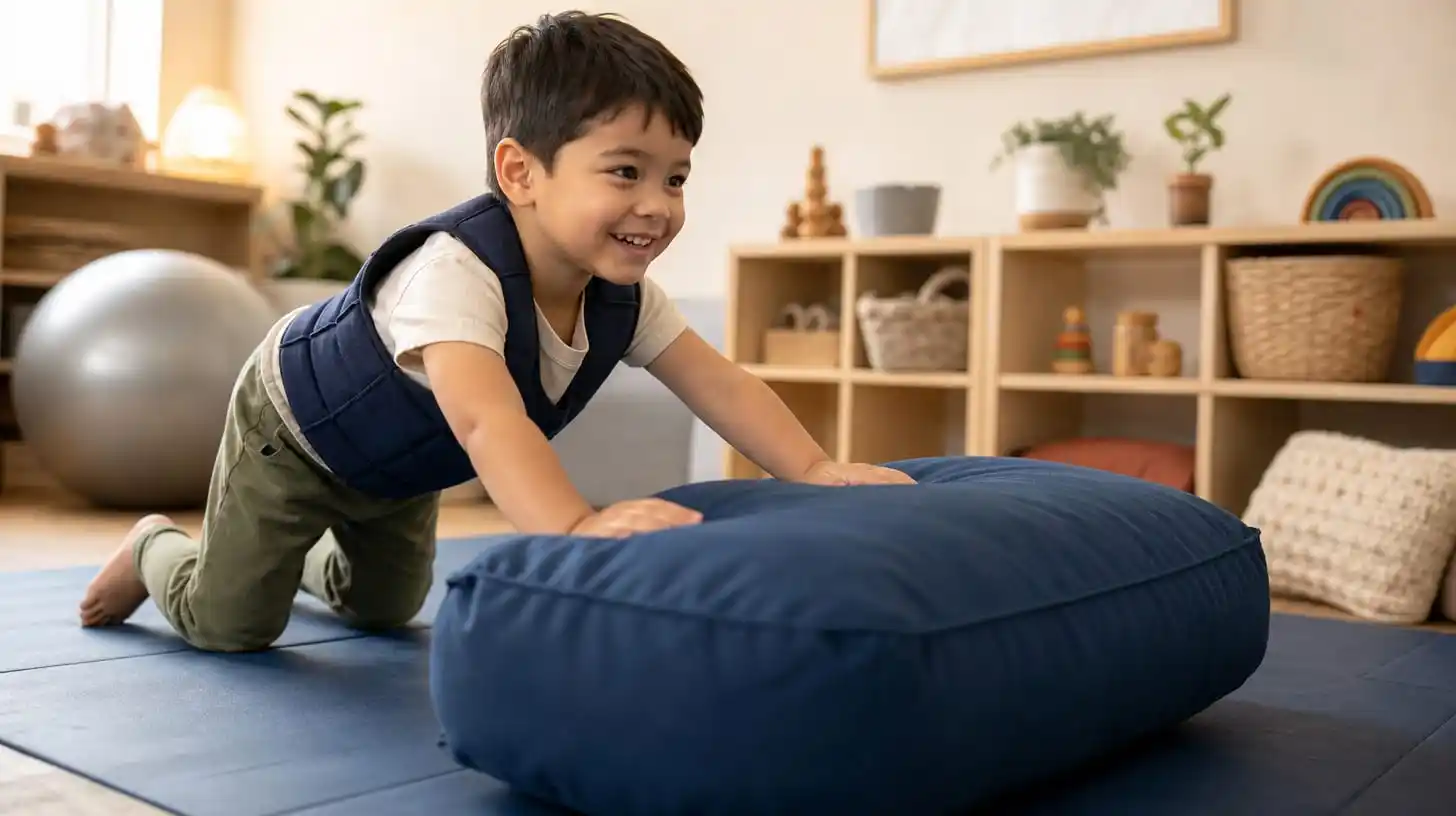
Weighted vests add small, evenly distributed weights to provide proprioceptive input through the shoulders and torso. Compression vests (sometimes called pressure vests) use snug, stretchy fabric to give an all-over "hug" of deep pressure without added weight. Some children prefer the grounded feel of weight; others prefer the even squeeze of compression.
Weighing the Evidence Honestly
We want to be straight with you here. For autism specifically, systematic reviews have found limited and insufficient evidence that weighted vests reduce challenging behaviors, so professionals recommend using them with caution and monitoring (Association for Science in Autism Treatment). For ADHD, the picture is a bit more encouraging: one randomized study found some support for weighted vests improving attention and on-task behavior, though not every measure improved (American Journal of Occupational Therapy / AOTA).
The takeaway is not "don't try"—many families and OTs report real-world benefits—but "try thoughtfully," with professional input and honest observation of your own child. When you are ready to compare specific options, our dedicated spoke covers the best weighted and compression vests for kids, including how to choose the right weight, size, and style. As a general safety rule, weighted wearables are typically sized to a small percentage of a child's body weight and fitted with OT guidance—another reason to loop in a professional before you buy.
Body Socks and Sensory Sacks
A body sock is a stretchy, breathable fabric tube (usually Lycra or spandex) that a child climbs fully inside. As they push, stretch, and move against the resistant fabric, they get whole-body proprioceptive feedback and even compression at the same time—a two-in-one sensory experience that many kids find both fun and calming.
Sensory sacks are prized because they turn regulation into play. Children pretend to be inside a cocoon, a "stretchy monster," or a pod while their muscles work against the fabric in every direction. That resistance is the point: it delivers the muscle-and-joint input proprioceptive seekers love, wrapped in the soothing squeeze of deep pressure.
What They Help With
- Body awareness: pushing against the fabric maps the body's edges
- Calming: the compression can be organizing during overwhelm
- Motor planning: figuring out how to move inside the sock is great problem-solving
- Focused energy: a constructive outlet for crashing and rolling
When you are ready to shop, our spoke reviews the best body socks and sensory sacks, including how to pick the right size and fabric weight. As with any enclosing tool, supervise use, choose a breathable fabric, make sure your child can get out easily on their own, and stop if they show any distress. Used with a little care, a body sock can become one of the most-reached-for tools in a home sensory kit.
Frequently Asked Questions
What exactly is "heavy work"?
Heavy work is any activity that makes the muscles and joints work against resistance—pushing, pulling, lifting, carrying, hanging, or climbing. It is the everyday way we deliver proprioceptive input, and occupational therapists often build it into a child's sensory diet because many children find it organizing and calming (Understood.org).
How often should my child do proprioceptive activities?
There is no universal prescription. Many families offer short bursts of a few minutes before transitions or demanding tasks, and repeat throughout the day as needed. Because proprioceptive input rarely overstimulates, it is generally low-risk to offer regularly. An occupational therapist can help you build a schedule—a "sensory diet"—tailored to your child.
Is proprioceptive input evidence-based?
Proprioceptive and heavy-work strategies are core to Ayres Sensory Integration, which is recognized as an evidence-based approach for autistic children, especially for reaching individual functional goals. That said, the evidence for some individual sensory tools is still emerging and mixed, so it is best to view these as promising, low-risk supports rather than guaranteed cures (AOTA).
What is the difference between a weighted vest and a compression vest?
A weighted vest adds small weights to deliver proprioceptive input through the torso, while a compression vest uses snug, stretchy fabric to provide an even "hug" of deep pressure without added weight. Some children prefer one over the other; an OT can help you decide which to try first.
When should we see an occupational therapist?
If sensory-seeking or -avoiding behaviors interfere with daily life—learning, sleep, mealtimes, safety, friendships, or family routines—it is worth consulting a pediatric occupational therapist. An OT can assess your child's sensory profile and design a personalized plan, and can guide the safe introduction of weighted or compression tools.
Are weighted and compression tools safe?
They can be, when used thoughtfully. Introduce them with OT guidance, size them to the individual child, use them for defined periods rather than leaving them on, and only with a child who can remove the tool independently. Never force a reluctant child. When in doubt, ask your occupational therapist.
Conclusion
Proprioception is the quiet sense that helps every child feel grounded, coordinated, and in control of their own body. For kids with autism, ADHD, and SPD, intentional proprioceptive and heavy work sensory tools—from a laundry-basket "job" to a body sock to a weighted vest—can turn overwhelming moments into organized, regulated ones.
Start simple and free: build a few minutes of heavy work into the transitions that are hardest in your home, and notice what changes. Layer in deep pressure at wind-down time. And when a behavior gets in the way of daily life, reach out to a pediatric occupational therapist who can personalize a plan and help you introduce weighted tools safely. Small, consistent doses of the right input, chosen with your child rather than imposed on them, tend to go a long way.
Explore the full series
- What Is Proprioception? The Body-Awareness Sense in Autism & ADHD — The body-awareness sense explained, and why it matters for autism and ADHD.
- Heavy Work Activities for Kids: 20 Proprioceptive Ideas for Home — Twenty practical heavy work activities you can run at home with things you already own.
- Proprioceptive Activities for Toddlers and Preschoolers — Age-appropriate proprioceptive play for ages 1-5, with the safety rules that matter most.
- Proprioceptive Input in the Classroom: Heavy Work for School — Heavy work that survives a real classroom, and how to get it into place with the school team.
- Proprioceptive vs. Vestibular Input: How They Differ and Work Together — How the two movement senses differ, how to tell which one your child is seeking, and how they work together.
- Deep Pressure Therapy at Home: A Parent's Practical Guide — Hands-on deep pressure techniques you can use tonight, plus the weighted-tool safety rules that matter.
- Using Proprioceptive Input for Calming and Self-Regulation — When to offer proprioceptive input — before, during and after the hard moments — and what actually helps.
- Proprioceptive Input and Heavy Work for Teens and Adults — Discreet, grown-up ways to get proprioceptive input at school, at work and in everyday life.
- Best Weighted & Compression Vests for Kids with Autism & SPD — How to choose between weighted and compression vests, with five OT-informed picks.
- Best Body Socks and Sensory Sacks for Proprioceptive Input — What a body sock actually does, how to size one, and five picks compared.