This article contains affiliate links. We may earn a commission if you make a purchase through our links, at no extra cost to you.
Key Takeaways
- Proprioception is your body-awareness sense — the input from receptors in your muscles, tendons, and joints that tells you where your body is and how it is moving without looking.
- For many autistic and ADHD children, this sense works differently, which can look like crashing, bumping, using too much force, or craving tight squeezes.
- Kids fall on a spectrum from sensory seeking (constantly needing more input) to under-responsiveness (needing more input just to register their body).
- Heavy work and deep pressure are the two proprioceptive strategies occupational therapists reach for most, because this input tends to have an organizing, calming effect on the nervous system.
- If proprioceptive differences affect daily life, an occupational therapist (OT) can assess your child and build an individualized plan.
Proprioception is your body's "position sense" — the information your brain gathers from receptors inside your muscles, tendons, and joints that tells you where each body part is and how hard it is working, all without looking. It is the reason you can climb stairs in the dark, touch your nose with your eyes closed, or judge how firmly to hold a paper cup. For children with autism and ADHD, this sense often processes information differently, which shapes how they move, self-regulate, and experience the world.
Understanding proprioception is one of the most useful things a parent or caregiver can do, because so many puzzling behaviors — the child who crashes into the couch, chews their sleeves, or hugs too hard — start to make sense once you see them as a search for body-awareness input. This explainer is part of our complete guide to proprioceptive and heavy work tools, and it lays the groundwork for everything else in that collection.
Table of Contents
- What Is Proprioception?
- How Proprioception Differs From the Other Senses
- Proprioception and Autism: Why Body Awareness Can Look Different
- Signs of Proprioceptive Seeking vs. Under-Responsiveness
- Why Heavy Work and Deep Pressure Help Regulate the Nervous System
- When to Talk to an Occupational Therapist
- Frequently Asked Questions
What Is Proprioception?
Proprioception is the sense that tells you where your body is in space and how your muscles and joints are moving, using feedback from special receptors buried in your muscles, tendons, and joints. It runs quietly in the background every second of the day, which is exactly why most people have never heard of it.
According to the NAPA Center, a pediatric therapy provider, proprioception is our body's ability to sense movement, action, and position, and it relies on receptors called proprioceptors located within the muscles and joints. These proprioceptors — chiefly the muscle spindles that detect stretch and length and the Golgi tendon organs that detect force and tension, as described by the clinical resource Physiopedia — continuously send signals to the brain about the position and effort of every limb.
When this system is working smoothly, movement feels automatic. You do not think about how much pressure to use when you pick up an egg versus a dumbbell; your proprioceptive system calibrates it for you. When the system sends unclear or muffled signals, everyday actions that most of us take for granted can require conscious effort — and that effort can be exhausting for a child.
How Proprioception Differs From the Other Senses
Most of us grew up learning we have five senses: sight, hearing, smell, taste, and touch. Occupational therapists work with a broader map that includes two "hidden" internal senses: proprioception (body position) and the vestibular sense (balance and movement). Proprioception is different from the classic five because its receptors point inward — they report on your own body rather than the outside world.
In fact, sensory integration — the framework many OTs use — focuses heavily on three foundational senses. According to the Autism Research Institute, sensory integration therapy centers primarily on the tactile, vestibular, and proprioceptive systems, because these three form the base on which higher-level skills like coordination, attention, and self-regulation are built.
Proprioception and the vestibular system are close partners. Proprioception tells the brain where the body is, while vestibular (movement) input — sensed in the inner ear — tells the brain how the body is moving through space. The two work together every time a child balances on a curb, spins on a swing, or rights themselves after a stumble. That is why activities that combine movement with resistance often feel so satisfying and organizing to sensory kids.
Proprioception and Autism: Why Body Awareness Can Look Different
Sensory processing differences are not a side note in autism — they are a core, recognized feature. The DSM-5, the manual clinicians use to diagnose autism spectrum disorder, lists hyper- or hyporeactivity to sensory input among its diagnostic criteria, as summarized by Autism Speaks.
These differences are also extremely common. A narrative review published in the National Library of Medicine notes that sensory processing differences are reported in the large majority of autistic individuals, with estimates across studies commonly landing in the range of roughly 90% or higher, depending on how they are measured. In other words, atypical sensory processing — including proprioception — is closer to the rule than the exception.
For a child, differences in body awareness can show up in ways that are easy to misread. A child who bumps into furniture may be labeled clumsy. A child who presses too hard with a pencil and tears the page may be called careless. A child who seeks out tight hugs, wedges into small spaces, or leans heavily on other people may seem "too much." In reality, each of these behaviors can be the nervous system's attempt to gather clearer proprioceptive information about where the body is and what it is doing.
It is worth saying plainly: proprioceptive differences are not misbehavior, and they are not a character flaw. They are a difference in how the brain receives and interprets body signals. That reframe alone tends to lower stress for the whole family.
Signs of Proprioceptive Seeking vs. Under-Responsiveness
Children generally fall somewhere on a spectrum between two patterns. Many kids show a mix of both, and a child can shift between them depending on the day, the environment, and how regulated they feel.
Signs of proprioceptive seeking
A "seeker" actively hunts for intense muscle-and-joint input because it feels regulating. According to the NAPA Center, common signs of proprioceptive-seeking or dysfunction include:
- Crashing, jumping, and bumping into people, walls, or furniture on purpose
- Playing rough, giving very hard hugs, or leaning and pushing against others
- Using too much force — pressing hard when writing, coloring, or handling toys
- Craving tight clothing, snug spaces, or being wrapped up
- Chewing or biting on clothing, pencils, or other objects
- Preferring crunchy or chewy foods
Signs of proprioceptive under-responsiveness
An "under-responder" needs more input just to register where their body is. This can look like:
- Appearing clumsy — frequently tripping, falling, or dropping things
- Difficulty with motor planning, such as navigating stairs or learning to ride a bike
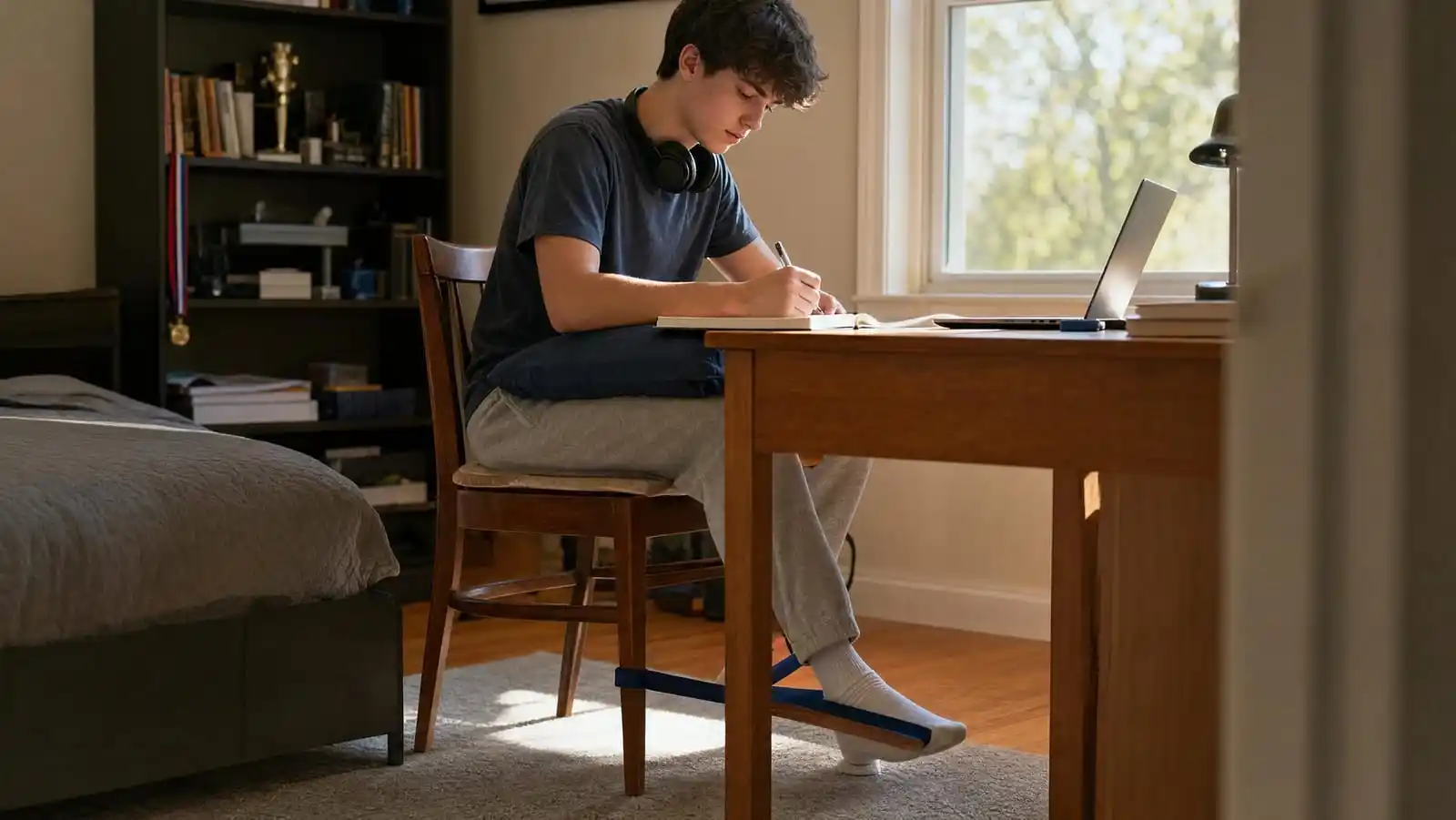
- Slumping, poor posture, or resting the head on the desk while working
- Seeming unaware of personal space or how much force they are using
- Fatiguing quickly during physical activities
Why the Same Child Can Look So Different
Body awareness is not fixed. A child who seeks constant input at home may look under-responsive and tired at school after a long day of holding it together. This is one reason occupational therapists observe a child across multiple settings rather than judging a single moment — and why a professional assessment is so valuable when patterns are confusing.
Why Heavy Work and Deep Pressure Help Regulate the Nervous System
When OTs want to help a child feel more organized, two proprioceptive strategies come up again and again: heavy work and deep pressure.
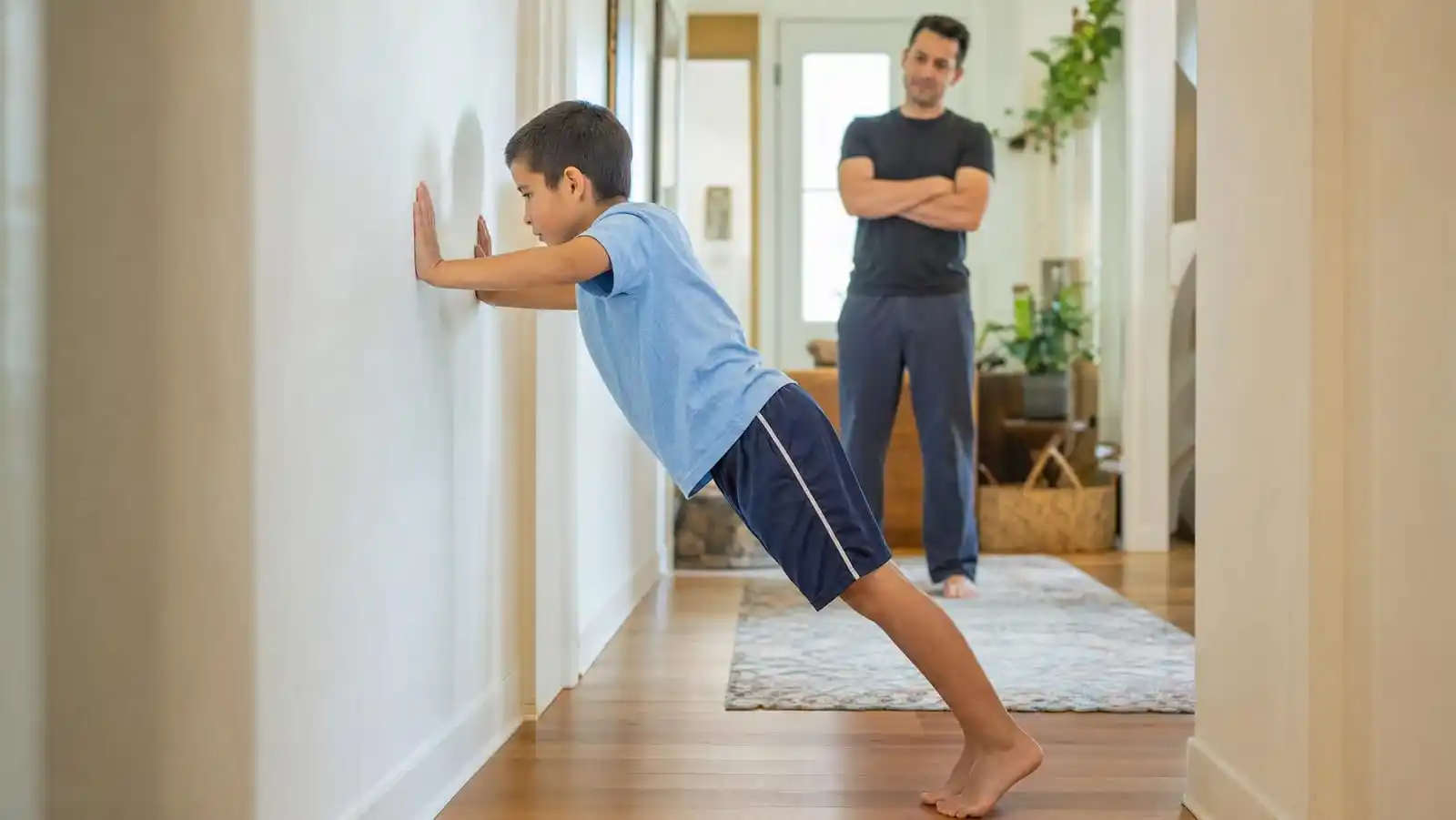
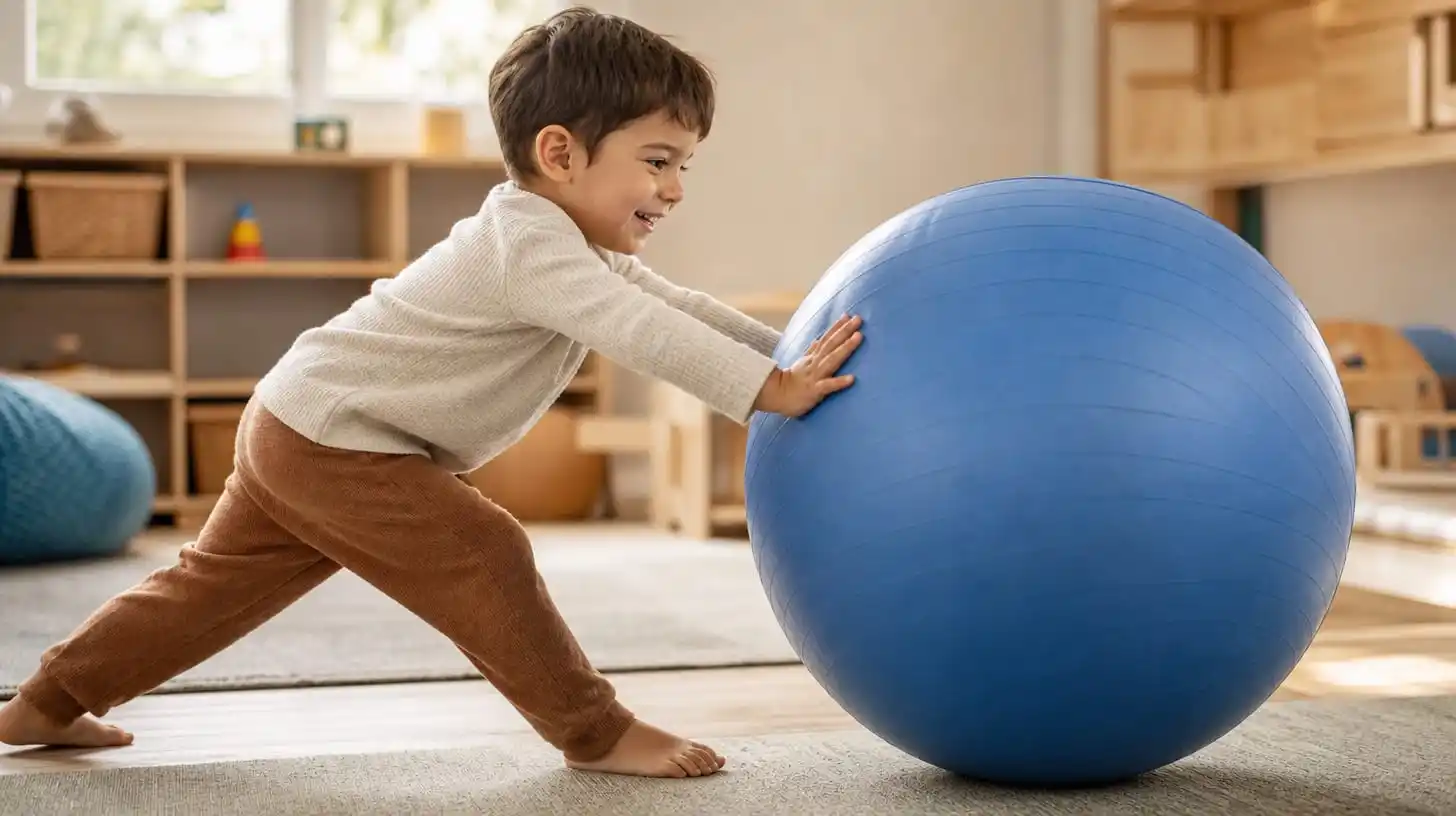
Heavy work means activities that make the muscles push, pull, carry, or lift against resistance — think crawling, animal walks, carrying groceries, pushing a laden laundry basket, or hanging from a bar. According to The OT Toolbox, an occupational-therapy resource, this kind of proprioceptive input is often used in therapy to support regulation, attention, and body awareness, and it can have a calming, organizing effect even for children who seem highly energetic. There are many simple heavy work activities you can do at home with no special equipment, which we cover in a dedicated guide.
Deep pressure is firm, even input across the body — a snug hug, a "sandwich" between two cushions, or a wearable that hugs the trunk. Emerging research is cautiously encouraging here. A pilot study published in the National Library of Medicine found that a short-term deep-pressure seat was associated with reductions in behavioral and biological stress markers in children with autism. Researchers propose that deep-pressure input may nudge the nervous system toward a calmer, less "fight-or-flight" state — though the authors and other reviewers note that high-quality studies are still limited, so deep pressure is best viewed as a supportive tool rather than a guaranteed treatment.
Wearable options are one of the most popular ways families deliver this input throughout the day. If you are exploring garments that provide gentle, constant deep pressure, our roundup of the best weighted and compression vests walks through age-appropriate choices and how they are typically used. An occupational therapist can help you match the type and intensity of input to your individual child.
When to Talk to an Occupational Therapist
Every child seeks movement and pressure sometimes — a love of jumping or bear hugs is not, by itself, a concern. It may be worth seeking guidance when proprioceptive patterns start to interfere with daily life: safety (a child who crashes hard enough to get hurt), learning (trouble sitting, writing, or focusing), self-care, sleep, or relationships.
The NAPA Center recommends that if you suspect a child shows signs of proprioceptive dysfunction, you talk with an occupational or physical therapist in your community about whether an evaluation makes sense. An OT can observe your child across settings, identify their specific sensory profile, and design an individualized plan — sometimes called a "sensory diet" — rather than relying on generic advice. Nothing in this article is a diagnosis or a substitute for that professional assessment.
Frequently Asked Questions
What is proprioception in simple terms?
Proprioception is your body-awareness or "position" sense. It uses receptors in your muscles, tendons, and joints to tell your brain where your body parts are and how much effort they are using — which is how you can touch your nose or walk across a dark room without looking, as the NAPA Center explains.
Is proprioception always affected in autism?
Not always, but sensory processing differences are very common in autism and are recognized in the DSM-5 diagnostic criteria, per Autism Speaks. Research reviews report atypical sensory processing in the large majority of autistic individuals. Each child is different, so the best way to understand your child's profile is an assessment with an occupational therapist.
What is the difference between proprioception and the vestibular sense?
Proprioception tells the brain where the body is using input from muscles and joints, while the vestibular sense — based in the inner ear — tells the brain how the body is moving and whether it is balanced. According to the Autism Research Institute, both are foundational senses that sensory integration therapy addresses, and they work closely together during movement.
Why does deep pressure seem to calm my child?
Firm, even pressure provides strong proprioceptive input, and many occupational therapists observe that it helps children feel more grounded and organized. A pilot study in the National Library of Medicine linked short-term deep pressure to lower behavioral and biological stress in autistic children, although researchers caution that larger studies are still needed. Responses vary from child to child.
Can I support my child's proprioception at home?
Yes. Simple heavy-work play — carrying, pushing, crawling, and climbing — provides proprioceptive input and is easy to build into a normal day, as The OT Toolbox describes. For anything more structured, an occupational therapist can tailor activities and intensity to your child specifically.
Final Thoughts
Once you understand proprioception, a lot of everyday behavior stops looking random and starts looking purposeful. The child who crashes, chews, squeezes, or leans is not misbehaving — they are gathering the body-awareness input their nervous system is asking for. Your job as a parent or caregiver is not to stop that search, but to help meet it in safe, regulating ways.
From here, the next step is to explore practical tools and activities that deliver proprioceptive input intentionally. You can find those, along with product picks and OT-informed strategies, in Sensory Toy Space's proprioceptive and heavy work guide. And when patterns are confusing or affecting daily life, remember that an occupational therapist is your best partner for turning this understanding into a plan that fits your child.