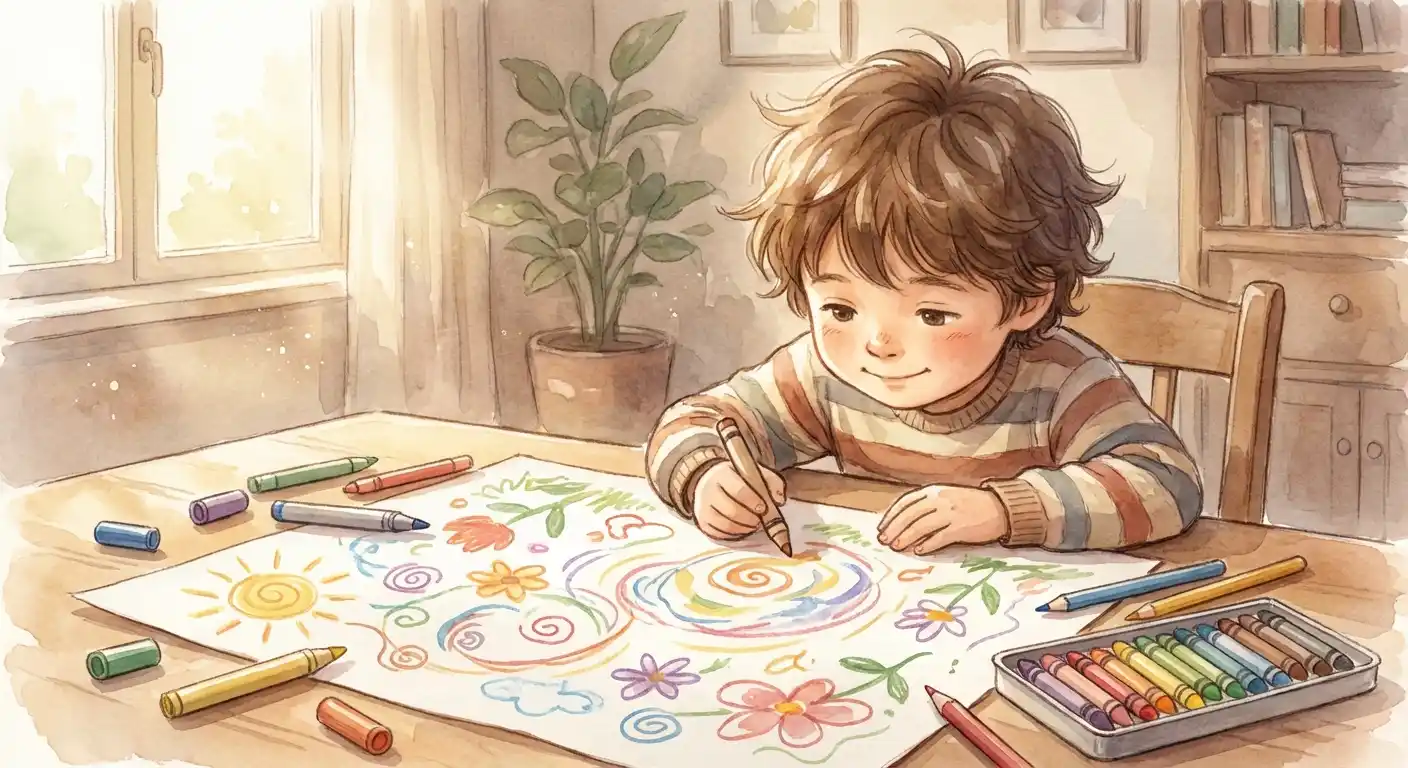
Drawing isn't just about creating pretty pictures. For children with autism, it's a powerful tool that can unlock fine motor development, emotional expression, and even social connection in ways that might surprise you. The right drawing toys can transform art time from a source of frustration into a gateway for growth. For more creative options, see our guide to autism-friendly painting toys.
How Drawing Supports Children with Autism
The benefits of drawing extend far beyond the paper. Here's what's really happening when children with autism engage in drawing activities:
Fine Motor Development
Every stroke of a marker or pencil builds the small muscle strength and coordination needed for writing, buttoning clothes, and countless daily tasks. For children with autism who may have delays in motor planning or coordination, regular drawing practice creates neural pathways that support physical development.
The key is matching the drawing tool to your child's current abilities. Thick markers and crayons are easier to grip, while fine-line markers challenge more advanced skills. Progression should feel natural, not forced.
Emotional Regulation
Drawing can be profoundly calming. The repetitive motions, the focus required, and the sensory feedback all contribute to a regulated state. Many occupational therapists recommend drawing as part of a sensory diet for children who need help managing their arousal levels.
For children who struggle to identify or express emotions verbally, drawing provides an alternative outlet. A child might not be able to say they're anxious, but they can draw dark, heavy lines. This visual communication opens doors for caregivers to understand and support their child's emotional world.
Visual-Spatial Skills
Children with autism often have strong visual processing abilities. Drawing activities leverage this strength while building related skills like spatial awareness, part-to-whole understanding, and visual memory. These skills transfer to academic areas like math and reading.
Self-Expression Without Words
Not every child with autism will be verbal, and even those who are may find certain topics difficult to discuss. Drawing provides a voice that doesn't require words. Through art, children can share their interests, experiences, and inner worlds in ways that feel safe and natural.
Choosing the Right Drawing Tools
The wrong drawing supplies can turn art time into a meltdown. Here's how to choose wisely:
Consider Sensory Sensitivities
Some children are sensitive to:
- Smells: Many markers have strong scents. Look for low-odor or unscented options
- Textures: Paper grain, marker tips, and crayon wax all have distinct textures. Experiment to find preferences - see our tactile sensory toys guide for more
- Sounds: The squeak of markers on paper bothers some children. Different papers produce different sounds
- Mess: Wet media like paint can be overwhelming. Start with dry options if needed
Match the Challenge Level
Tools that are too difficult lead to frustration. Tools that are too easy don't build skills. Find the sweet spot:
- Beginners: Large crayons, chunky markers, finger paints (if tolerated)
- Intermediate: Standard markers and crayons, colored pencils
- Advanced: Fine-line markers, mechanical pencils, detailed coloring books
Create Structure
Many children with autism thrive with clear expectations. Set up drawing time with:
- A designated space
- A specific time in the routine
- Clear start and end signals
- Organized supplies with designated spots
Making Drawing Time Successful
A few strategies can make all the difference:
Start Small: Five minutes of successful drawing is better than twenty minutes of struggle. Build duration gradually as your child's tolerance grows.
Follow Interests: If your child loves trains, provide train-themed coloring pages or encourage train drawings. Interest drives engagement.
Reduce Pressure: There's no wrong way to draw. Avoid correcting or directing unless asked. The process matters more than the product.
Model Without Expectation: Draw alongside your child without commenting on their work. This provides social modeling without pressure.
Celebrate Process: "You worked so hard on that!" focuses on effort rather than outcome, building intrinsic motivation.
Beyond the Paper
The skills built during drawing time don't stay at the art table. The hand strength supports handwriting. The focus transfers to academic tasks. The emotional regulation strategies become tools for challenging moments. The self-expression opens communication channels.
Drawing toys are investments in your child's development across multiple domains. Choose wisely, create a supportive environment, and watch as art becomes a pathway to growth you might never have imagined. For fidgeting tools that help maintain focus during drawing time, explore our tactile fidget toys for focus.